Learn how to recognize early signs of oral cancer, understand the key risk factors prevalent in Hyderabad, and discover the diagnostic and treatment services offered by AVMSmiles Dental Wellness.
Why Oral Cancer Awareness Matters in Hyderabad
Oral cancer is one of the most common malignancies in India, accounting for a significant share of cancer‑related deaths. In Telangana, the incidence is rising, partly because of lifestyle habits such as tobacco chewing and smoking. Early detection dramatically improves survival rates, making awareness a crucial first step. AVMSmiles Dental Wellness, located in Vanasthalipuram, Hyderabad, offers a dedicated team of oral health specialists who can identify suspicious lesions before they progress.
What Is Oral Cancer?
Oral cancer refers to malignant tumors that develop in the mouth or the oropharynx (the back of the throat). It can affect the lips, tongue, gums, inner lining of the cheeks, floor of the mouth, and the palate. Most oral cancers are squamous cell carcinomas, which arise from the flat cells that line the mouth.
Key Risk Factors for the Hyderabad Population
While anyone can develop oral cancer, certain habits and conditions increase the risk. In Hyderabad, the following factors are especially relevant:
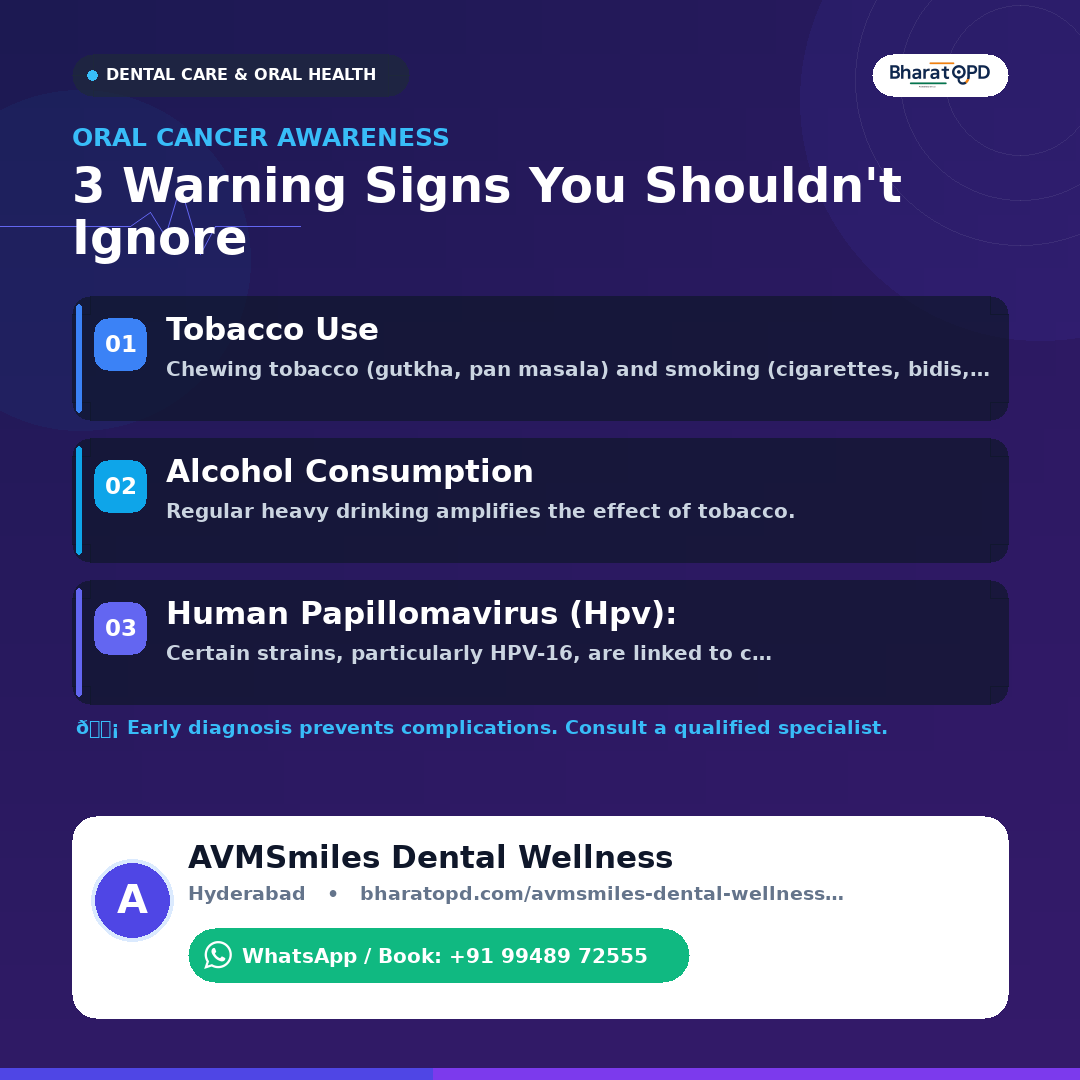
- Tobacco use: Chewing tobacco (gutkha, pan masala) and smoking (cigarettes, bidis, hookah) are the leading causes.
- Alcohol consumption: Regular heavy drinking amplifies the effect of tobacco.
- Human papillomavirus (HPV): Certain strains, particularly HPV‑16, are linked to cancers of the tongue and tonsils.
- Poor oral hygiene: Chronic irritation from ill‑fitting dentures or rough teeth can contribute.
- Dietary factors: Low intake of fruits and vegetables reduces protective antioxidants.
- Age and gender: Most cases occur after age 40, and men are affected more often than women.
Early Signs & Symptoms to Watch For
Oral cancer may not cause pain in its early stages. Keep an eye out for any of the following changes that persist for more than two weeks:
- A sore or ulcer that does not heal.
- Red or white patches (erythroplakia or leukoplakia) on the gums, tongue, or inner cheek.
- Persistent pain, numbness, or tingling in the mouth or lips.
- Difficulty chewing, swallowing, or moving the jaw.
- Unexplained swelling or thickening of the tissues.
- Changes in voice or persistent sore throat.
- Bleeding without an obvious cause.
If you notice any of these signs, schedule an appointment promptly.
When to See a Doctor at AVMSmiles Dental Wellness
Do not wait for pain to develop. The dental team at AVMSmiles Dental Wellness can perform a thorough oral examination during a routine check‑up. You should seek care if you:
- Have any of the early signs listed above.
- Use tobacco or alcohol and want a professional screening.
- Have a family history of head‑and‑neck cancers.
- Experience persistent sore throat or ear pain without infection.
How AVMSmiles Dental Wellness Diagnoses Oral Cancer
Our clinic follows a step‑wise protocol to ensure accurate diagnosis:
- Visual examination: The dentist uses a bright light and magnification to inspect every surface of the oral cavity.
- Adjunctive tools: Devices such as VELscope or toluidine blue staining may highlight abnormal tissue.
- Biopsy: If a lesion looks suspicious, a small tissue sample is taken and sent to a pathology lab for histopathological analysis.
- Imaging: When needed, panoramic X‑rays, CT scans, or MRI help assess the depth of invasion and involvement of nearby structures.
All results are discussed with you in person, and a personalized management plan is created.
Treatment Options Available in Hyderabad
Depending on the stage and location of the tumor, the following treatments may be recommended:
- Surgery: Removal of the tumor with clear margins, often performed by oral and maxillofacial surgeons. Reconstructive techniques restore function and aesthetics.
- Radiotherapy: External beam radiation targets cancer cells while sparing surrounding tissue. It may be used alone or after surgery.
- Chemotherapy: Systemic drugs are given to shrink tumors or treat advanced disease. Common agents include cisplatin and 5‑fluorouracil.
- Targeted therapy & immunotherapy: For HPV‑related or specific molecular profiles, newer agents such as pembrolizumab may be considered.
AVMSmiles Dental Wellness works closely with oncology centers in Hyderabad, ensuring seamless referral and coordinated care.
Prevention & Lifestyle Tips for Hyderabad Residents
Preventing oral cancer starts with everyday choices. Here are practical steps you can adopt:
- Quit tobacco: Seek help from local cessation programs, use nicotine replacement therapy, or consult a physician for prescription aids.
- Limit alcohol: Follow the national guideline of no more than two standard drinks per day for men and one for women.
- Maintain oral hygiene: Brush twice daily, floss, and visit AVMSmiles Dental Wellness at least twice a year for professional cleaning.
- Eat a balanced diet: Include plenty of fresh fruits, vegetables, and whole grains that provide antioxidants.
- Vaccinate against HPV: The HPV vaccine is recommended for adolescents and young adults; discuss eligibility with your doctor.
- Regular self‑examination: Use a mirror to inspect your mouth weekly; report any persistent changes.
- Protect against sun exposure: If you spend time outdoors, apply lip balm with SPF to prevent lip cancers.
Frequently Asked Questions
Is oral cancer always painful?
Not necessarily. Early lesions often cause no pain, which is why routine dental check‑ups are vital.
Can oral cancer be cured?
When detected at an early stage (Stage I or II), the 5‑year survival rate exceeds 80 %. Advanced stages have lower rates, emphasizing the need for early detection.
Do I need to stop using my denture if I have a lesion?
Continue wearing it unless your dentist advises otherwise. However, ill‑fitting dentures should be adjusted promptly, as chronic irritation can be a risk factor.
How often should I get screened?
If you have risk factors (tobacco, alcohol, HPV), an annual oral cancer screening is advisable. Otherwise, a routine dental exam every six months includes a basic visual check.
Is the biopsy painful?
The procedure is performed under local anesthesia, so you should feel only mild pressure. Most patients tolerate it well.