Learn the signs, risk factors, diagnosis, and treatment options for glaucoma, and discover how BhalaNetra Super Speciality Eye Hospital in Mumbai helps patients protect their vision.
What Is Glaucoma?
Glaucoma is a group of eye disorders that damage the optic nerve, often because of increased intra‑ocular pressure (IOP). If left untreated, the damage is irreversible and can lead to permanent vision loss. It is one of the leading causes of blindness worldwide, and early detection is crucial for preserving sight.
Common Types of Glaucoma
At BhalaNetra Super Speciality Eye Hospital, Dr. Rajesh Kumar and Dr. Meera Shah see patients with the following major types:
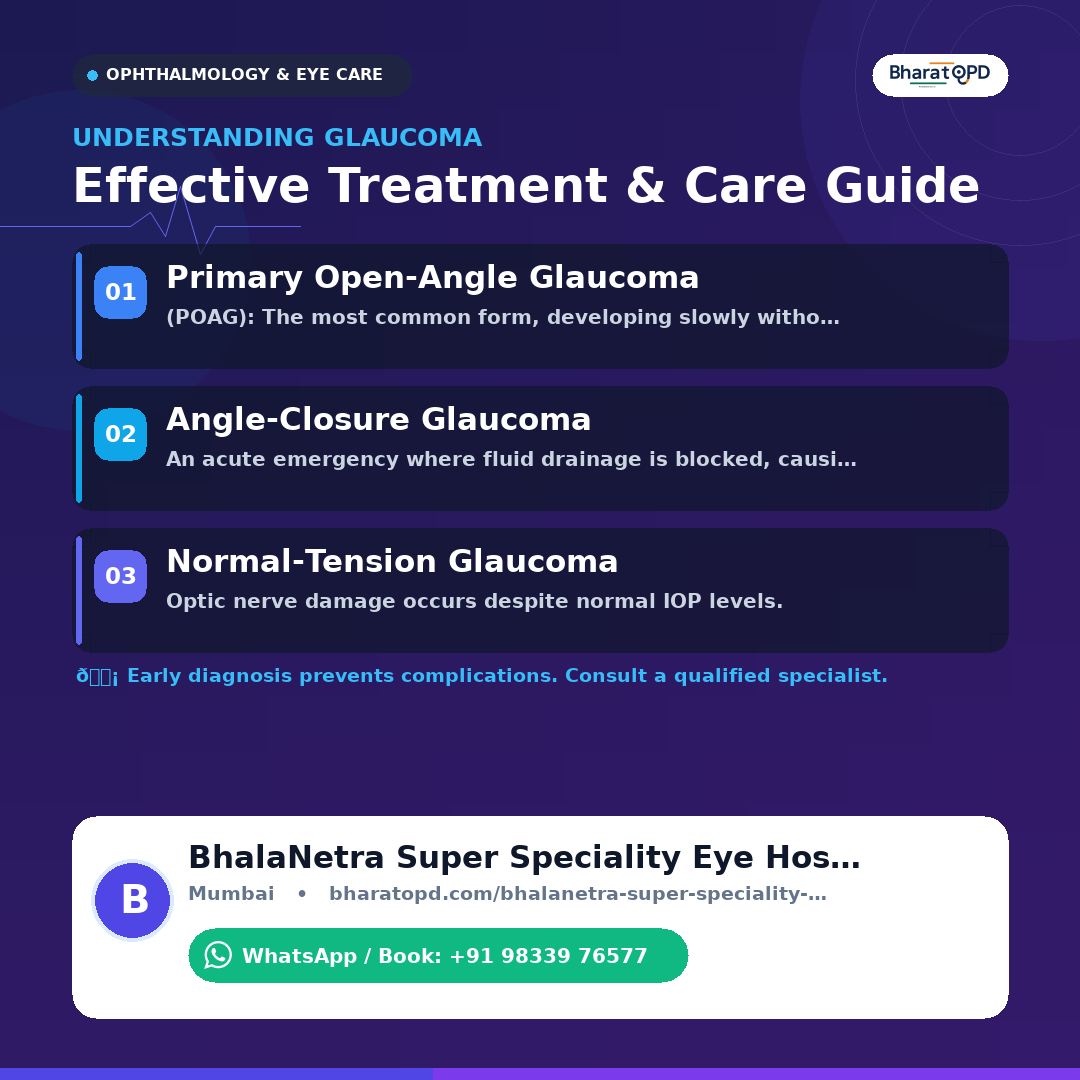
- Primary Open‑Angle Glaucoma (POAG): The most common form, developing slowly without obvious symptoms.
- Angle‑Closure Glaucoma: An acute emergency where fluid drainage is blocked, causing a rapid rise in IOP.
- Normal‑Tension Glaucoma: Optic nerve damage occurs despite normal IOP levels.
Causes and Risk Factors
Glaucoma does not have a single cause, but several factors increase the risk:
- Family history of glaucoma
- Age over 40 (risk rises sharply after 60)
- Indian ethnicity – studies show a higher prevalence among South Asians
- High myopia (nearsightedness)
- Diabetes, hypertension, and cardiovascular disease
- Prolonged use of corticosteroid eye drops
Symptoms to Watch For
Early glaucoma often has no symptoms, which is why regular eye checks are essential. When symptoms appear, they may include:
- Gradual loss of peripheral (side) vision
- Blurred vision or halos around lights (more common in angle‑closure)
- Eye pain, headache, nausea (acute angle‑closure)
- Redness of the eye
When Should You See a Doctor?
If you belong to any high‑risk group, experience any of the above symptoms, or simply have not had a comprehensive eye exam in the past two years, schedule an appointment at BhalaNetra. Early evaluation can prevent irreversible damage.
How Glaucoma Is Diagnosed at BhalaNetra
Dr. Meera Shah, the hospital’s glaucoma specialist, follows a systematic protocol:
- Detailed medical and family history
- Tonometry: Measures intra‑ocular pressure using a non‑contact or Goldmann applanation tonometer.
- Ophthalmoscopy: Direct view of the optic nerve head for cupping.
- Visual field testing: Detects peripheral vision loss.
- Pachymetry: Measures corneal thickness, which influences IOP readings.
All these tests are performed in the state‑of‑the‑art Glaucoma Clinic located on the second floor of BhalaNetra Super Speciality Eye Hospital, Bhandup West.
Treatment Options Available
Glaucoma treatment aims to lower IOP and protect the optic nerve. BhalaNetra offers a full spectrum of evidence‑based options:
1. Medications
First‑line therapy usually involves topical eye drops such as prostaglandin analogues, beta‑blockers, alpha‑agonists, or carbonic anhydrase inhibitors. The hospital’s pharmacy provides affordable generic versions, and the ophthalmologists tailor the regimen to each patient’s tolerance and lifestyle.
2. Laser Procedures
For patients who cannot tolerate drops or need additional pressure control, Dr. Rajesh Kumar performs:
- Selective Laser Trabeculoplasty (SLT): Improves drainage of the trabecular meshwork.
- Laser Peripheral Iridotomy (LPI): Creates a small opening in the iris to relieve angle‑closure risk.
3. Surgical Options
When medication and laser are insufficient, surgical interventions are considered:
- Trabeculectomy: Creates a new drainage pathway.
- Glaucoma Drainage Devices (e.g., Ahmed valve): Implanted to divert fluid.
- Minimally Invasive Glaucoma Surgery (MIGS): Offers quicker recovery with fewer complications.
All surgeries are performed in the hospital’s aseptic operation theatre, with post‑operative care coordinated by the same specialist team.
Living with Glaucoma in Mumbai
Managing glaucoma in a bustling city like Mumbai requires practical adjustments:
- Air quality: High pollution can exacerbate ocular irritation. Use protective sunglasses and keep indoor air filtered.
- Regular follow‑ups: BhalaNetra recommends at least two visits per year for stable patients; more frequent visits are needed after surgery or medication changes.
- Medication adherence: Set reminders on your phone. The hospital’s patient‑care desk can provide a printed schedule in Marathi, Hindi, or English.
- Transportation: The clinic is easily reachable via the Bhandup West railway station and local bus routes; parking is available for private vehicles.
For seniors or those with limited mobility, BhalaNetra offers home‑visit intra‑ocular pressure checks through its outreach program in the Bhandup and nearby Ghatkopar areas.
Prevention and Lifestyle Tips
While genetics cannot be changed, several habits reduce the risk of progression:
- Maintain a healthy blood pressure and blood sugar level.
- Engage in regular aerobic exercise (e.g., walking, cycling) to improve ocular blood flow.
- Avoid smoking and limit caffeine intake.
- Protect eyes from trauma – wear safety glasses during sports or construction work.
Nutrition also plays a role; foods rich in antioxidants (leafy greens, berries, nuts) support optic nerve health.
Frequently Asked Questions
Is glaucoma hereditary?
Yes, having a first‑degree relative with glaucoma increases your risk. Family screening is advised.
Can glaucoma be cured?
Glaucoma cannot be reversed, but effective treatment can halt or slow further damage.
Are eye drops safe for long‑term use?
When prescribed by a qualified ophthalmologist, most glaucoma drops are safe for lifelong use. Report any irritation to your doctor promptly.
How much does treatment cost at BhalaNetra?
Costs vary by treatment modality. The hospital offers transparent pricing, and many patients are eligible for government health schemes such as Ayushman Bharat.