A comprehensive guide to lower back pain for patients in Chennai – learn about common causes, warning signs, when to seek help, diagnostic methods, treatment options available at Institute of Advanced Spine Sciences, and practical tips for prevention.
Why Lower Back Pain Is a Common Concern in Chennai
Lower back pain (LBP) affects millions of Indians each year, especially in bustling cities like Chennai where long commutes, sedentary office work, and manual labor are part of daily life. While most episodes are short‑lived, persistent pain can disrupt work, family responsibilities, and overall quality of life.
Common Causes of Lower Back Pain
Understanding the root cause helps in choosing the right treatment. At the Institute of Advanced Spine Sciences, Dr. Akshay Raj, a senior spine surgeon, evaluates each patient individually, but the most frequent contributors include:
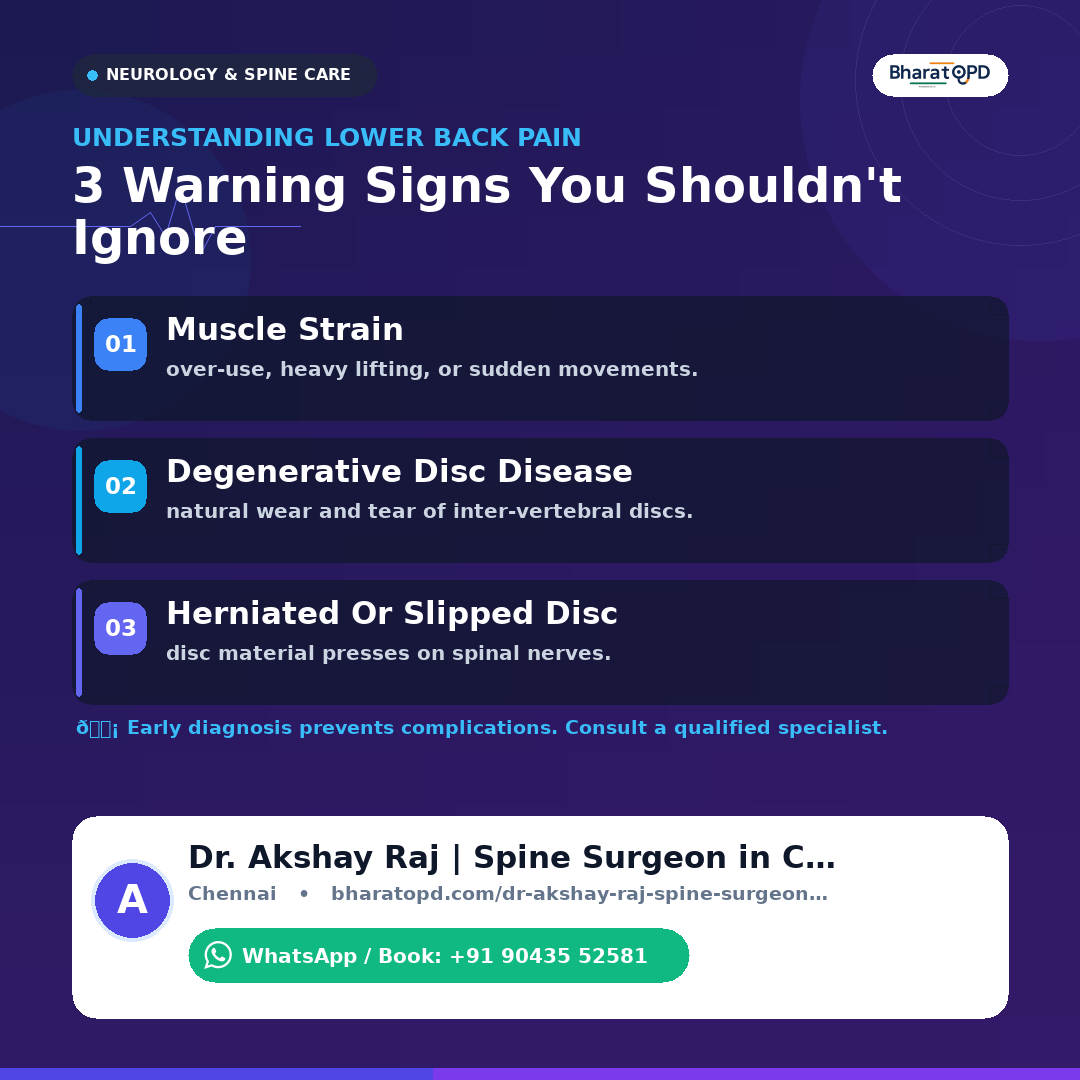
- Muscle strain – over‑use, heavy lifting, or sudden movements.
- Degenerative disc disease – natural wear and tear of inter‑vertebral discs.
- Herniated or slipped disc – disc material presses on spinal nerves.
- Spinal stenosis – narrowing of the spinal canal, common in older adults.
- Spondylolisthesis – a vertebra slips forward over the one below it.
- Postural problems – prolonged sitting, especially on poorly designed chairs.
- Osteoarthritis of the facet joints – arthritis affecting the joints that stabilize the spine.
Recognising the Symptoms
Typical signs of lower back pain include:
- Dull, aching pain in the lumbar region.
- Sharp or stabbing pain that radiates to the buttocks, thighs, or down the leg (sciatica).
- Stiffness that limits bending or twisting.
- Numbness, tingling, or weakness in the lower limbs.
- Pain that worsens after prolonged sitting, standing, or lifting.
If any of these symptoms persist for more than three weeks, or are accompanied by fever, unexplained weight loss, or loss of bladder/bowel control, seek medical attention promptly.
When to See a Doctor in Chennai
While occasional soreness can be managed with rest and simple home care, you should schedule an appointment at Institute of Advanced Spine Sciences if you experience:
- Pain lasting longer than three weeks.
- Radiating pain that interferes with daily activities.
- Weakness or loss of sensation in the legs.
- Recent trauma (e.g., fall or accident) followed by back pain.
- Any signs of infection such as fever or chills.
Dr. Akshay Raj and his multidisciplinary team are equipped to assess both acute and chronic cases, offering personalized care that aligns with the lifestyle and needs of Chennai residents.
How Lower Back Pain Is Diagnosed at Institute of Advanced Spine Sciences
The diagnostic pathway combines a detailed clinical interview with targeted investigations:
1. Clinical Evaluation
Dr. Akshay Raj conducts a thorough history‑taking, noting:
- Onset, duration, and pattern of pain.
- Occupational and recreational activities.
- Previous injuries or surgeries.
- Red‑flag symptoms (e.g., fever, weight loss).
A physical examination follows, assessing posture, spinal alignment, range of motion, and neurological function (reflexes, muscle strength, sensation).
2. Imaging Studies
Depending on the clinical suspicion, the following imaging may be ordered:
- X‑ray – evaluates bone alignment, fractures, and degenerative changes.
- Magnetic Resonance Imaging (MRI) – gold standard for disc pathology, nerve compression, and soft‑tissue assessment.
- Computed Tomography (CT) Scan – useful for detailed bone anatomy, especially when MRI is contraindicated.
All imaging is performed at the Gleneagles Hospital’s state‑of‑the‑art radiology department, ensuring quick turnaround for results.
3. Additional Tests
In select cases, blood tests (to rule out infection or inflammatory conditions) or electromyography (EMG) may be recommended.
Treatment Options Available at Institute of Advanced Spine Sciences
Management is tailored to the underlying cause, severity of symptoms, and patient preferences. The institute follows a step‑wise approach:
Conservative (Non‑Surgical) Care
Most patients improve with non‑invasive measures:
- Physiotherapy – customized exercise programs to strengthen core muscles and improve flexibility.
- Medications – NSAIDs, muscle relaxants, or short courses of oral steroids under physician supervision.
- Lifestyle Modification – ergonomic advice for office work, weight management, and activity pacing.
- Spinal Injections – epidural steroid injections or facet joint blocks performed by Dr. Akshay Raj for targeted pain relief.
Surgical Interventions
If conservative therapy fails after 6–12 weeks, or if there is progressive neurological deficit, surgical options are discussed:
- Microdiscectomy – minimally invasive removal of herniated disc material pressing on a nerve root.
- Lumbar Decompression (Laminectomy) – removal of bone or tissue compressing the spinal canal.
- Spinal Fusion – stabilising two or more vertebrae using bone grafts and instrumentation, indicated for spondylolisthesis or severe instability.
- Artificial Disc Replacement – preserving motion at the diseased segment, offered in select cases.
All surgeries are performed in Gleneagles Hospital’s accredited operation theatres, with Dr. Akshay Raj leading a team of anesthesiologists, nursing staff, and rehabilitation specialists.
Post‑Operative Rehabilitation
Recovery protocols include early mobilization, physiotherapy, and regular follow‑up visits to monitor healing and prevent recurrence.
Preventive Strategies for Residents of Chennai
Prevention is especially important given Chennai’s traffic congestion and sedentary work culture. Consider the following evidence‑based tips:
- Maintain a Healthy Weight – excess weight adds stress to lumbar discs.
- Ergonomic Workstations – use chairs with lumbar support, keep monitor at eye level, and take a 5‑minute stretch break every hour.
- Core‑Strengthening Exercises – planks, bridges, and pelvic tilts performed 3‑4 times a week.
- Safe Lifting Techniques – bend at the hips and knees, keep the load close to the body.
- Regular Physical Activity – walking, swimming, or yoga improves flexibility and blood flow to spinal structures.
- Stay Hydrated – adequate fluid intake helps maintain disc health.
For personalized advice, book a preventive health check‑up with Dr. Akshay Raj at the Institute of Advanced Spine Sciences.
Frequently Asked Questions
Can I continue my office job while experiencing lower back pain?
Yes, most patients can remain at work with appropriate ergonomic adjustments and short, frequent breaks. However, if pain worsens with sitting, discuss a modified duty plan with your employer and your physician.
How long does it take to recover after a microdiscectomy?
Most patients resume light activities within 2–3 weeks and return to normal work within 4–6 weeks, depending on the nature of their job. A structured physiotherapy program accelerates recovery.
Are there any risks associated with spinal injections?
Complications are rare but can include temporary soreness at the injection site, infection, or nerve irritation. All procedures are performed under strict aseptic conditions in Gleneagles Hospital.
Is yoga safe for someone with lower back pain?
Gentle, supervised yoga can improve flexibility and core strength. Avoid deep forward bends or twisting poses until cleared by your spine specialist.
What should I expect during my first visit to Dr. Akshay Raj?
You will undergo a detailed history review, physical examination, and discussion of any prior imaging. Based on findings, Dr. Raj will recommend a tailored management plan and explain any further investigations needed.