Explore the causes of infertility, when to seek help, diagnostic steps, and IVF treatment options available at Lilavati Hospital, Mumbai, with insights from Dr. Hrishikesh Pai.
Understanding Infertility
Infertility is defined as the inability of a couple to achieve a clinical pregnancy after 12 months of regular, unprotected intercourse. In India, many couples face this challenge silently due to social stigma, but modern reproductive medicine offers effective solutions.
Common Causes of Infertility
Both male and female factors can contribute. Below are the most frequently encountered reasons in Mumbai’s clinical practice:
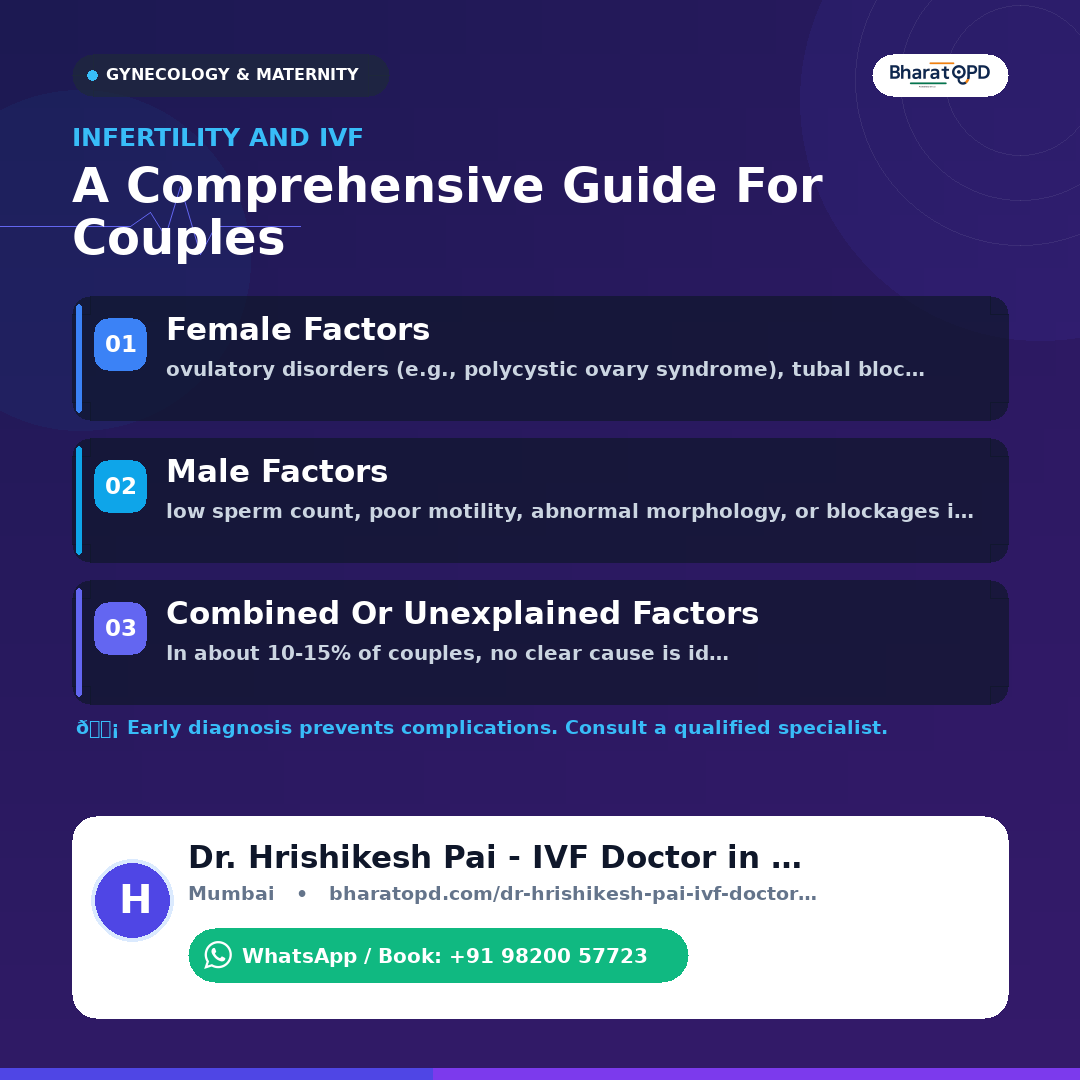
- Female factors: ovulatory disorders (e.g., polycystic ovary syndrome), tubal blockage from pelvic infections or endometriosis, uterine abnormalities, and age‑related decline in egg quality.
- Male factors: low sperm count, poor motility, abnormal morphology, or blockages in the reproductive tract.
- Combined or unexplained factors: In about 10‑15% of couples, no clear cause is identified despite thorough evaluation.
When Should You See a Doctor?
Seek professional help if any of the following apply:
- You're under 35 and have not conceived after 12 months of regular intercourse.
- You're over 35 and have not conceived after 6 months.
- History of pelvic infections, sexually transmitted diseases, or abdominal surgeries.
- Known male factor issues such as low sperm count.
- Irregular menstrual cycles, severe pain during periods, or hormonal imbalances.
Early consultation allows timely investigation and improves the chances of successful treatment.
Diagnostic Journey at Lilavati Hospital
Dr. Hrishikesh Pai, a senior IVF specialist at Lilavati Hospital, follows a systematic protocol to pinpoint the cause of infertility:
- Medical history and physical exam: Detailed review of both partners' health, lifestyle, and previous pregnancies.
- Baseline blood tests: Hormone levels (FSH, LH, AMH, prolactin, thyroid), ovarian reserve, and infectious disease screening.
- Semen analysis: At least two samples to assess count, motility, and morphology.
- Imaging studies: Transvaginal ultrasound for ovarian and uterine assessment; hysterosalpingography (HSG) or laparoscopy to evaluate tubal patency.
- Advanced tests (if needed): Genetic screening, anti‑Müllerian hormone (AMH) testing, or endometrial biopsy.
All investigations are performed in the state‑of‑the‑art fertility unit of Lilavati Hospital, ensuring privacy and comfort.
Treatment Options Overview
Based on the diagnosis, Dr. Pai recommends a tailored plan. Options range from simple lifestyle modifications to assisted reproductive technologies (ART):
- Ovulation induction: Medications such as clomiphene citrate or letrozole to stimulate ovulation.
- Intrauterine insemination (IUI): Direct placement of processed sperm into the uterus during the fertile window.
- In‑vitro fertilisation (IVF): Retrieval of eggs, fertilisation in the laboratory, and transfer of embryos.
- Intracytoplasmic sperm injection (ICSI): Injection of a single sperm into each egg, ideal for severe male factor infertility.
- Donor programs: Use of donor eggs, sperm, or embryos when indicated.
- Surrogacy coordination: Legal and medical support for gestational surrogacy, adhering to Indian regulations.
What to Expect from IVF at Lilavati Hospital
Dr. Hrishikesh Pai leads a multidisciplinary team that includes embryologists, anaesthesiologists, and counsellors. The IVF cycle typically follows these steps:
- Ovarian stimulation: Daily injections of gonadotropins for 8‑12 days, monitored with ultrasound and hormone tests.
- Egg retrieval: Minor surgical procedure under sedation; eggs are collected from the follicles.
- Laboratory fertilisation: Eggs are mixed with prepared sperm; fertilised embryos are cultured for 3‑5 days.
- Embryo transfer: One or two embryos are placed into the uterus using a thin catheter; the procedure is painless.
- Luteal phase support: Hormonal supplements (progesterone) for 2‑3 weeks to aid implantation.
- Pregnancy test: Blood β‑hCG test 12‑14 days after transfer.
Lilavati Hospital provides a comfortable IVF suite, 24‑hour nursing support, and a dedicated fertility counsellor to address emotional concerns.
Cost‑Effective Tips for Mumbai Couples
While IVF is a significant investment, several strategies can help manage expenses:
- Choose a single‑embryo transfer to reduce the risk of multiple pregnancies and associated costs.
- Utilise Lilavati’s in‑house laboratory, which eliminates extra fees for external testing.
- Explore government schemes such as the “Assistance to Disabled Persons for Treatment” (ADPT) if eligible.
- Plan the cycle during off‑peak months when the hospital may offer promotional packages.
Lifestyle and Prevention Advice for Indian Couples
Even before seeking treatment, adopting healthy habits can improve fertility:
- Nutrition: Incorporate whole grains, legumes, fresh fruits, and leafy greens. Limit processed foods and excess sugar.
- Weight management: Aim for a BMI between 18.5‑24.9; both underweight and overweight affect ovulation and sperm quality.
- Exercise: Moderate activity (30 minutes, 5 days/week) enhances hormonal balance.
- Avoid toxins: Reduce exposure to tobacco smoke, excessive alcohol, and environmental pollutants common in Mumbai’s traffic‑dense areas.
- Stress reduction: Practices such as yoga, meditation, or counselling can positively influence reproductive health.
Frequently Asked Questions
Is IVF safe for women over 40?
Success rates decline with age, but IVF remains a viable option. Dr. Pai may recommend using donor eggs to improve outcomes while ensuring the mother’s health is closely monitored.
How many IVF cycles are usually needed?
Approximately 60‑70% of couples achieve pregnancy within the first two cycles. The exact number depends on age, cause of infertility, and embryo quality.
Can male infertility be treated without IVF?
Yes. Options include lifestyle changes, medication for hormonal issues, or surgical correction of blockages. In cases of severe sperm deficiency, ICSI or donor sperm may be advised.
What is the success rate of IVF at Lilavati Hospital?
While individual results vary, Lilavati’s IVF program aligns with national benchmarks, offering success rates comparable to leading Indian fertility centres.
Do I need a special diet during IVF?
A balanced diet rich in protein, iron, calcium, and antioxidants supports egg quality and implantation. Specific supplements (folic acid, vitamin D) are often prescribed by Dr. Pai.