Learn everything you need to know about IVF at DY Patil Fertility Centre, Navi Mumbai – from causes of infertility and when to seek help, to step‑by‑step treatment details, costs, and practical tips for couples planning their journey with Dr. Hrishikesh Pai.
Introduction
Infertility affects millions of Indian couples, and the emotional toll can be as heavy as the physical challenges. In Navi Mumbai, DY Patil Fertility Centre, located on the 4th Floor of DY Patil Hospital, offers state‑of‑the‑art IVF services under the guidance of Dr. Hrishikesh Pai, a recognised consultant gynaecologist and IVF specialist. This guide walks you through the entire IVF journey, helping you make informed decisions.
Why Seek IVF?
IVF is recommended when natural conception is unlikely after a thorough evaluation. It bypasses many of the barriers that prevent sperm from meeting egg, offering a controlled environment for fertilisation and early embryo development.
Common Causes of Infertility
Both partners contribute to the reproductive equation. The most frequent reasons include:
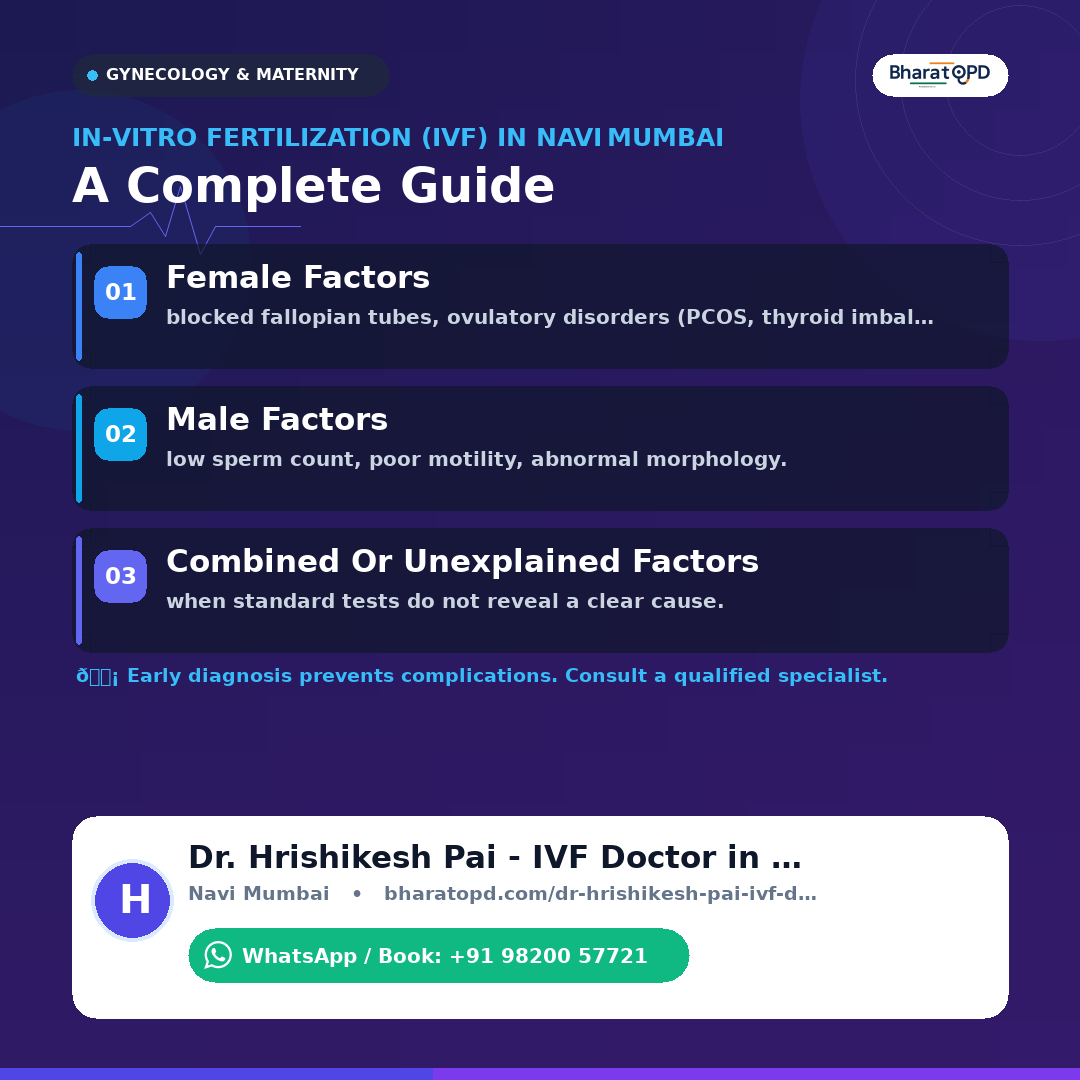
- Female factors: blocked fallopian tubes, ovulatory disorders (PCOS, thyroid imbalance), endometriosis, uterine fibroids.
- Male factors: low sperm count, poor motility, abnormal morphology.
- Combined or unexplained factors: when standard tests do not reveal a clear cause.
When to Consult a Fertility Specialist
In India, couples are generally advised to seek help after 1 year of regular, unprotected intercourse if the woman is under 35, or after 6 months if she is older than 35. Early consultation is also wise if you have known risk factors such as irregular periods, recurrent miscarriages, or a history of pelvic infections.
What to Expect at DY Patil Fertility Centre
Initial Consultation
During your first visit, Dr. Hrishikesh Pai will review your medical history, discuss lifestyle factors, and outline the diagnostic pathway. The aim is to personalise the treatment plan based on age, duration of infertility, and any underlying conditions.
Diagnostic Tests
Accurate diagnosis guides the choice of treatment. Typical investigations include:
- Blood tests for hormone levels (FSH, LH, AMH, prolactin, thyroid).
- Transvaginal ultrasound to assess ovarian reserve and uterine anatomy.
- Semen analysis for the male partner.
- Hysterosalpingography (HSG) or saline sonography to check tubal patency.
- Genetic screening if recurrent pregnancy loss is suspected.
The IVF Cycle Explained
Once the work‑up is complete, the IVF process typically follows these steps:
- Ovarian stimulation: Daily injections of gonadotropins for 8‑12 days to produce multiple mature eggs.
- Monitoring: Serial ultrasounds and hormone tests to track follicle growth.
- Egg retrieval: A minor surgical procedure under sedation to collect eggs from the ovaries.
- Laboratory fertilisation: Eggs are mixed with prepared sperm; embryos are cultured for 3‑5 days.
- Embryo transfer: One or more embryos are placed into the uterus using a thin catheter.
- Luteal support: Progesterone supplements help maintain the uterine lining.
- Pregnancy test: Blood β‑hCG is measured 10‑14 days after transfer.
DY Patil Fertility Centre follows international laboratory standards, and Dr. Pai personally reviews embryo quality before transfer.
Treatment Options Beyond IVF
Depending on the diagnosis, other assisted reproductive techniques may be appropriate:
- IUI (Intra‑uterine Insemination): Useful for mild male factor or unexplained infertility.
- ICSI (Intracytoplasmic Sperm Injection): Direct injection of a single sperm into an egg, often combined with IVF for severe male factor.
- Donor gametes: Egg or sperm donation when either partner’s gametes are unsuitable.
- Surrogacy: Legal and ethical considerations apply; DY Patil provides counselling for interested couples.
Success Rates and Influencing Factors
Success is measured by live‑birth rates per embryo transfer. While DY Patil does not publish centre‑specific numbers, Indian IVF clinics report average live‑birth rates of 30‑45 % for women under 35, decreasing with age. Factors that improve outcomes include:
- Higher ovarian reserve (AMH > 1.0 ng/mL).
- Good embryo quality (grade A or B).
- Absence of uterine abnormalities.
- Adherence to medication schedules and lifestyle advice.
Preparing for IVF: Practical Tips for Couples in Navi Mumbai
Lifestyle and Nutrition
Adopting a healthy routine can enhance IVF success:
- Maintain a BMI between 18‑25 kg/m²; both under‑ and overweight can affect outcomes.
- Consume a balanced Indian diet rich in whole grains, legumes, fruits, and leafy greens. Include sources of folic acid (green leafy veg, fortified cereals).
- Avoid tobacco, excessive alcohol, and recreational drugs.
- Limit caffeine to <200 mg per day (≈2 cups of tea/coffee).
- Engage in moderate exercise – brisk walking or yoga for 30 minutes most days.
Financial Planning
IVF costs in Navi Mumbai range from ₹ 1.20 lakh to ₹ 2.50 lakh per cycle, depending on medication, number of embryos transferred, and any additional procedures (ICSI, genetic testing). Consider the following:
- Check if your employer health‑insurance policy covers any part of the IVF cycle.
- State‑run schemes such as the “Maharashtra IVF Assistance Programme” provide subsidies for eligible couples (income‑based criteria).
- DY Patil Fertility Centre offers transparent, itemised billing and can guide you on financing options.
Travel & Accommodation
The centre is situated in Sector 5, Dr D Y Patil Vidyanagar, easily reachable by local train (Vashi/Belapur stations) and the Mumbai–Pune Expressway. For out‑of‑town patients:
- Patil Hospital provides on‑site guest rooms for short stays.
- Nearby budget hotels (e.g., Hotel Sai Krishna, Hotel Green View) are within a 5‑minute drive.
- Parking is available at the hospital campus, and a shuttle service runs from Vashi Railway Station on appointment days.
After the Procedure: Follow‑up Care
Post‑transfer monitoring includes:
- Progesterone supplementation for 2‑3 weeks.
- Ultrasound at 6‑7 weeks to confirm fetal heartbeat.
- Regular antenatal visits if pregnancy is established.
If the cycle does not result in pregnancy, Dr. Pai will discuss the next steps – whether to repeat IVF, adjust medication, or explore alternative treatments.
Frequently Asked Questions
Is IVF painful?
Most women experience mild discomfort during ovarian stimulation (bloating, mild cramping). Egg retrieval is performed under sedation, so you feel little to no pain. Post‑procedure soreness is usually short‑lived.
How many embryos should be transferred?
Dr. Pai follows the Indian Council of Medical Research (ICMR) guidelines, recommending a single high‑quality embryo for most women under 35 to reduce the risk of multiple pregnancies. Older women or those with previous IVF failures may be offered two embryos after thorough counselling.
Can IVF be done if I have a chronic illness?
Conditions such as well‑controlled diabetes or hypertension do not preclude IVF, but they require optimisation before stimulation. The fertility team will coordinate with your primary physician to ensure safety.
What is the success chance for a 38‑year‑old woman?
Live‑birth rates decline with age; for women aged 38, the average success per IVF cycle in India is around 20‑30 %. Dr. Pai will assess ovarian reserve and may suggest pre‑implantation genetic testing to improve outcomes.
How long does a complete IVF cycle take?
From the first day of medication to embryo transfer, a typical fresh IVF cycle spans 4‑6 weeks. If a frozen‑embryo transfer is planned, the timeline can be extended by a few months.