Chronic Kidney Disease (CKD) often develops silently. Learn how to recognise early symptoms, get accurate diagnosis, explore treatment options, and adopt prevention strategies—tailored for patients visiting Dr Neha Pandey, Nephrologist, at East Patel Nagar, Delhi.
Why Chronic Kidney Disease Matters in Delhi
Delhi’s rapid urbanisation, high prevalence of hypertension, diabetes, and exposure to polluted air have contributed to a rising burden of chronic kidney disease (CKD). Early detection can slow progression, reduce the need for dialysis, and improve quality of life. Dr Neha Pandey, a board‑certified nephrologist at the clinic located at 7/27, Block 1, East Patel Nagar, Delhi, offers comprehensive CKD care that integrates modern medicine with practical lifestyle advice for Indian patients.
What Is Chronic Kidney Disease?
CKD is defined as a gradual loss of kidney function over months or years. The kidneys filter waste, excess fluid, and electrolytes from the blood; when they can no longer perform this task efficiently, toxins build up, leading to complications such as anaemia, bone disease, and cardiovascular problems.
Common Causes of CKD in India
While the underlying mechanisms are similar worldwide, certain risk factors are especially prevalent in India:
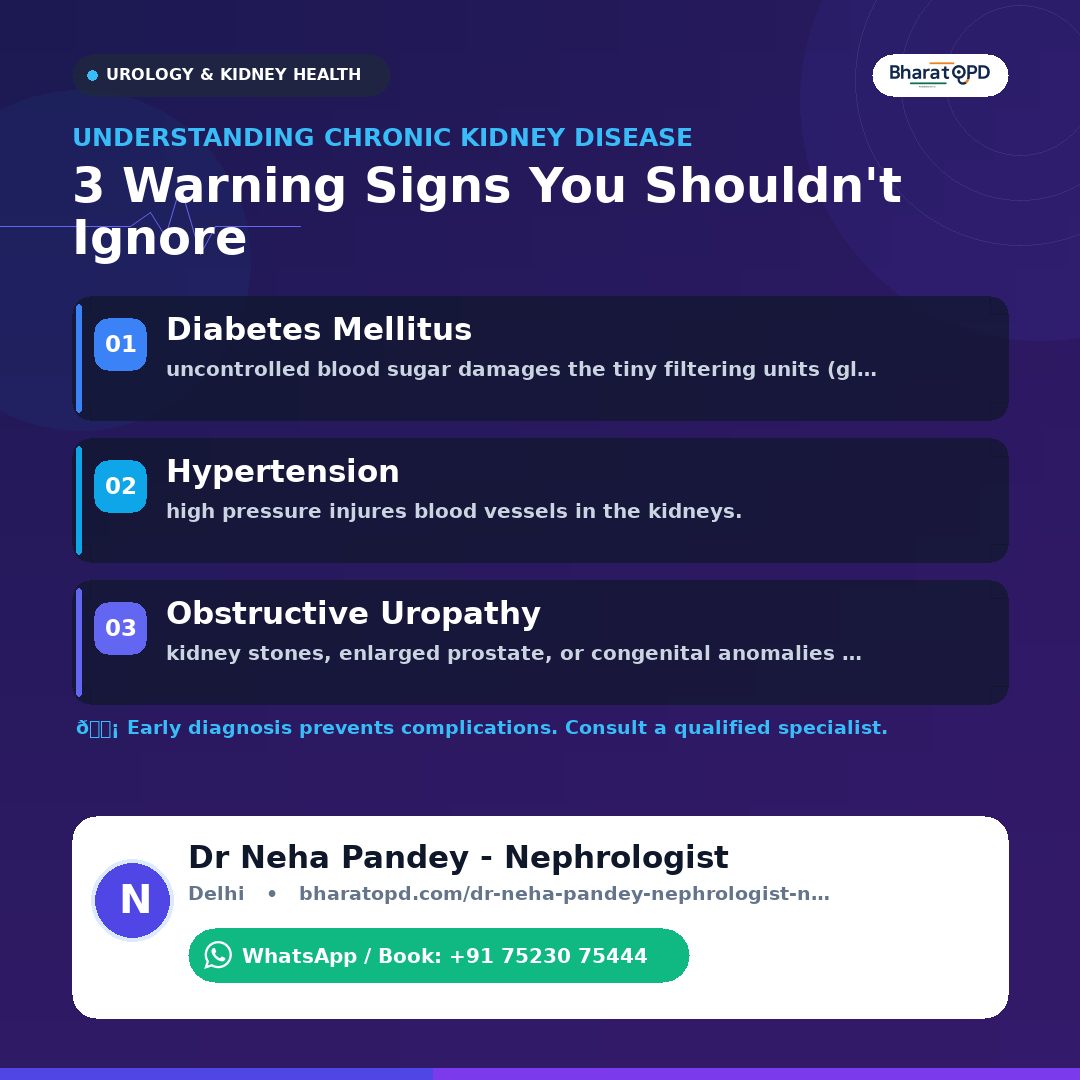
- Diabetes mellitus – uncontrolled blood sugar damages the tiny filtering units (glomeruli).
- Hypertension – high pressure injures blood vessels in the kidneys.
- Obstructive uropathy – kidney stones, enlarged prostate, or congenital anomalies that block urine flow.
- Chronic glomerulonephritis – inflammatory conditions often linked to infections.
- Use of nephrotoxic drugs – over‑the‑counter NSAIDs, certain herbal preparations, and some antibiotics.
- Environmental factors – exposure to heavy metals and air pollutants common in Delhi.
Early Symptoms to Watch For
CKD can be asymptomatic for years. When symptoms appear, they are often subtle:
- Persistent fatigue or weakness
- Swelling (edema) of ankles, feet, or around the eyes
- Foamy or bubbly urine indicating protein loss
- Frequent urination at night (nocturia)
- Loss of appetite, nausea, or a metallic taste
- Itchy skin, especially on the arms and legs
If you notice any of these signs, especially in the presence of diabetes or hypertension, schedule a check‑up at Dr Neha Pandey’s clinic promptly.
When to See a Doctor
Do not wait for severe symptoms. Seek medical advice if you have:
- Blood pressure consistently above 130/80 mm Hg
- Fasting blood glucose ≥126 mg/dL or HbA1c ≥6.5 % li>Family history of kidney disease
- Recurrent urinary infections or kidney stones
- Unexplained swelling or changes in urine colour/volume
Dr Neha Pandey’s clinic offers same‑day appointments for high‑risk patients and a dedicated follow‑up system for chronic cases.
How CKD Is Diagnosed
At the clinic, the diagnostic pathway follows national guidelines (KDIGO) and includes:
- Blood tests – Serum creatinine to calculate estimated glomerular filtration rate (eGFR).
- Urine analysis – Detects protein (albumin), blood, and markers of infection.
- Blood pressure monitoring – Office and, if needed, 24‑hour ambulatory readings.
- Imaging – Renal ultrasound to assess size, obstruction, or structural abnormalities.
- Special tests – When indicated, kidney biopsy, serum electrolytes, and bone‑mineral profile.
All results are discussed in a private consultation, where Dr Pandey explains the stage of CKD (Stage 1‑5) and its implications.
Treatment Options Tailored for Indian Patients
Management aims to slow progression, treat complications, and maintain quality of life.
1. Controlling Blood Pressure and Blood Sugar
ACE inhibitors or ARBs are first‑line for hypertension in CKD because they also reduce proteinuria. Dr Pandey often combines these with lifestyle changes that fit Indian diets—reducing salt (less than 5 g/day), moderating refined carbohydrate intake, and encouraging regular physical activity.
2. Dietary Modifications
Nutrition counselling is provided by a dietitian familiar with Indian cuisine. Key points include:
- Limiting sodium: avoid pickles, papads, and excessive chutney.
- Protein moderation: 0.6‑0.8 g/kg/day, focusing on plant‑based sources like dal, paneer, and low‑fat milk.
- Potassium awareness: patients with advanced CKD may need to restrict high‑potassium foods such as banana, coconut water, and certain leafy greens.
- Phosphorus control: reduce processed cheese, soft drinks, and phosphates hidden in packaged foods.
3. Managing Anemia and Bone Health
Iron supplements, erythropoiesis‑stimulating agents, and vitamin D analogues are prescribed as needed, following Indian Council of Medical Research (ICMR) recommendations.
4. Addressing Fluid Overload
For patients with swelling, Dr Pandey may adjust diuretic doses and advise on fluid intake timing, especially during Delhi’s hot summer months.
5. Preparing for Renal Replacement Therapy
If CKD progresses to Stage 5 (eGFR < 15 mL/min/1.73 m²), options include haemodialysis at nearby government hospitals, peritoneal dialysis at home, or kidney transplantation. The clinic coordinates referrals and financial counselling through Delhi’s health schemes.
Prevention Strategies for the Delhi Community
Prevention is a collective effort. Here are practical steps you can adopt:
- Annual health screening – Check blood pressure, fasting glucose, and urine protein at least once a year, especially if you are over 30 years or have a family history.
- Limit over‑the‑counter NSAIDs – Use paracetamol for fever/pain unless advised otherwise.
- Stay hydrated – Aim for 2‑3 L of water daily, adjusting for climate and activity level.
- Avoid tobacco and excess alcohol – Both accelerate kidney damage.
- Maintain a healthy weight – Target BMI 18.5‑24.9; regular walking or yoga is popular in Delhi.
- Environmental awareness – Use air‑purifiers at home during high‑pollution days and wear masks when outdoors.
Dr Neha Pandey’s clinic runs quarterly community talks in East Patel Nagar to spread awareness and offers free urine dip‑stick screening on World Kidney Day.
What to Expect During Your First Visit
When you arrive at 7/27, Block 1, East Patel Nagar, the reception staff will register your details and collect basic vitals. You will then meet Dr Pandey for a 30‑minute consultation where she will:
- Review your medical history and risk factors.
- Explain the purpose of each test and obtain informed consent.
- Provide a personalised management plan.
- Schedule follow‑up appointments and, if needed, refer you to allied services (dietitian, physiotherapist, social worker).
The clinic’s electronic health record system ensures you receive reminders for lab work and medication refills, a feature especially useful for patients juggling busy Delhi schedules.
Frequently Asked Questions
Can CKD be reversed?
Early‑stage CKD (Stages 1‑2) can often be stabilised or even improved with strict blood pressure and blood sugar control, dietary changes, and avoidance of nephrotoxic agents. Once significant scarring occurs (Stage 4‑5), the focus shifts to slowing further decline.
Is dialysis necessary for everyone with Stage 5 CKD?
No. Some patients opt for conservative management, focusing on symptom control and quality of life. Dr Pandey discusses all options, including eligibility for transplantation.
How much does CKD care cost in Delhi?
Costs vary. Public hospitals offer subsidised dialysis, while private clinics like Dr Pandey’s provide transparent fee structures. Many patients qualify for Ayushman Bharat or Delhi’s Chief Minister’s Health Scheme, which can cover a large portion of expenses.
Are herbal medicines safe for kidney health?
Some traditional remedies contain heavy metals or nephrotoxic compounds. Always inform Dr Pandey about any supplements you take; she can guide you toward safe alternatives.
Can I travel during the COVID‑19 pandemic if I have CKD?
Yes, with precautions. Carry your medication list, stay hydrated, avoid crowded places, and wear a mask. Dr Pandey can provide a travel health certificate if required.
Take the First Step Today
Early detection saves kidneys. If you live in East Patel Nagar or any part of Delhi and have any of the risk factors mentioned, call Dr Neha Pandey’s clinic at +91‑11‑XXXX‑XXXX or book an appointment online through the hospital’s portal. The team is ready to guide you toward healthier kidneys and a brighter future.