Everything you need to know about hip joint problems, when to see Dr. Parv Mittal, diagnosis, treatment options—including hip replacement—and post‑operative care, tailored for residents of Firozabad.
Understanding Hip Joint Problems
The hip is a ball‑and‑socket joint that bears the weight of the body during walking, climbing stairs, and sitting. Over time, the cartilage that cushions the joint can wear away, leading to pain and reduced mobility. In Firozabad, where daily activities often involve standing for long hours in markets or factories, hip disorders are a common reason for orthopedic consultation.
Common Causes of Hip Damage
Several factors can lead to hip joint degeneration:
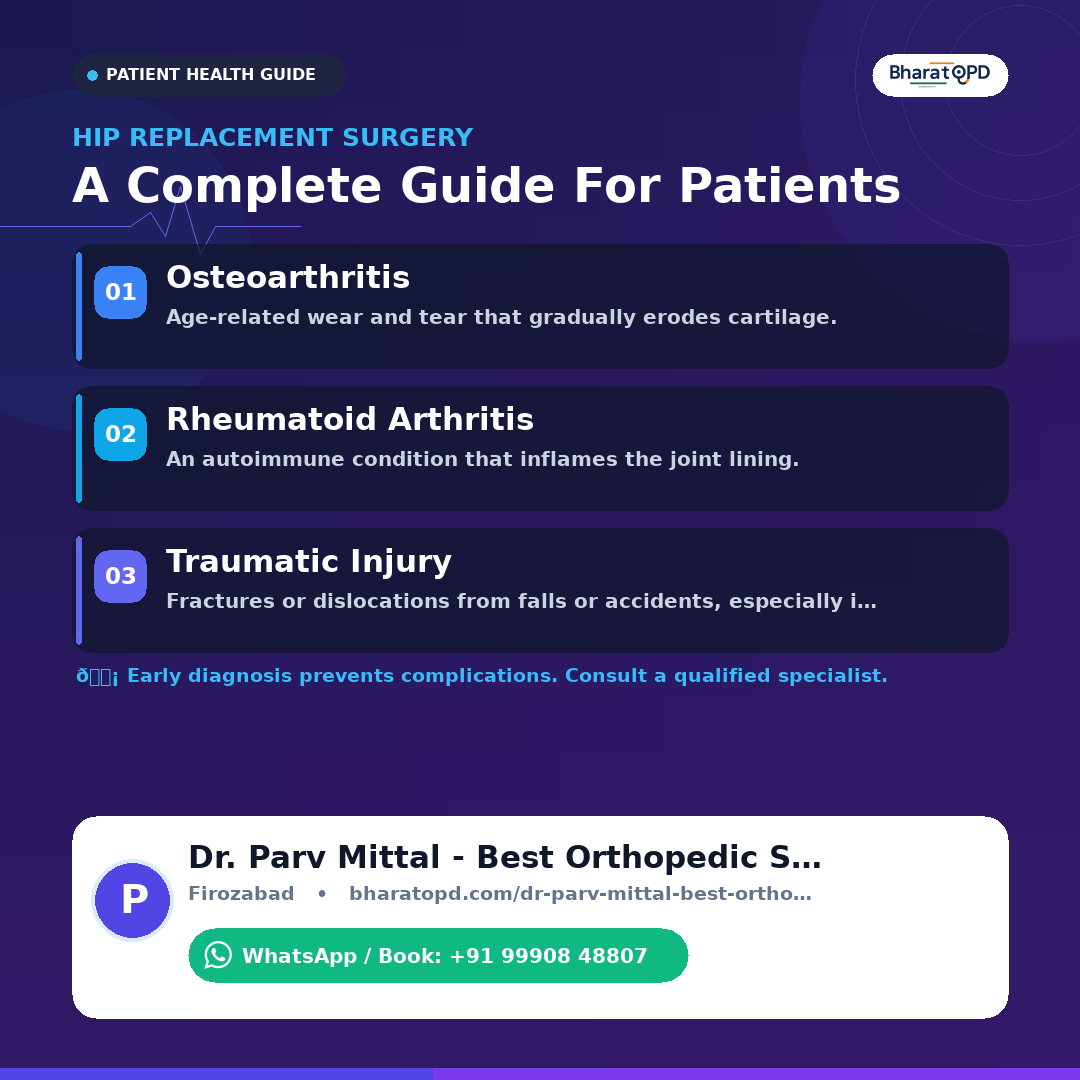
- Osteoarthritis: Age‑related wear and tear that gradually erodes cartilage.
- Rheumatoid arthritis: An autoimmune condition that inflames the joint lining.
- Traumatic injury: Fractures or dislocations from falls or accidents, especially in industrial settings.
- Congenital deformities: Developmental dysplasia of the hip that may become symptomatic in adulthood.
- Obesity: Excess weight increases stress on the hip joint.
Recognising the Symptoms
Early recognition helps prevent further joint damage. Typical signs include:
- Persistent dull ache in the groin, thigh, or buttock.
- Stiffness, especially after periods of inactivity.
- Difficulty walking or climbing stairs.
- A grinding or clicking sensation during movement.
- Reduced range of motion, making it hard to put on shoes or sit cross‑legged.
When to See Dr. Parv Mittal
Dr. Parv Mittal, a renowned orthopedic surgeon practicing at 2, Mathura Nagar, Vibhab Nagar, Firozabad, advises patients to schedule an appointment if any of the following occur:
- Pain that interferes with daily activities for more than two weeks.
- Nighttime pain that wakes you from sleep.
- Visible swelling or warmth around the hip.
- Sudden loss of mobility after a fall or injury.
Early evaluation allows Dr. Mittal to recommend conservative measures or plan for surgical intervention before severe arthritis sets in.
How Hip Problems Are Diagnosed
At the orthopaedic department in Firozabad, Dr. Mittal follows a systematic approach:
- Clinical examination: Assessment of gait, range of motion, and pain points.
- Imaging studies:
- X‑ray: First‑line tool to view bone alignment and joint space.
- MRI: Provides detailed images of cartilage, labrum, and soft tissues.
- CT scan: Useful for complex fractures or pre‑operative planning.
- Laboratory tests: Blood work to rule out infection or inflammatory arthritis.
Treatment Options
Conservative Management
For mild to moderate symptoms, Dr. Mittal may recommend:
- Physical therapy focusing on strengthening the gluteal and core muscles.
- Weight‑loss programs tailored to local dietary habits.
- Non‑steroidal anti‑inflammatory drugs (NSAIDs) prescribed according to Indian drug regulations.
- Intra‑articular steroid injections for short‑term relief.
When Surgery Becomes Necessary
Hip replacement (total hip arthroplasty) is considered when pain persists despite conservative care, or when joint damage severely limits function. Dr. Parv Mittal, with extensive experience in hip and knee replacements, offers both cemented and cementless prosthetic options, depending on bone quality.
What to Expect During Hip Replacement Surgery
Key steps performed at the hospital in Firozabad:
- Pre‑operative assessment: Blood tests, cardiac evaluation, and a discussion of anesthesia options (generally spinal or general).
- Surgical technique: Through a small incision, the damaged femoral head is removed and replaced with a metal or ceramic ball; the acetabulum receives a plastic or metal cup.
- Duration: Typically 1.5–2 hours.
- Hospital stay: Most patients are discharged after 2–3 days, provided pain is controlled and basic mobility is achieved.
Recovery and Rehabilitation
Successful outcomes rely on a structured rehab plan:
- Day 1–2: Gentle ankle pumps, quadriceps sets, and assisted walking with a walker.
- Week 1–3: Outpatient physiotherapy focusing on hip flexion, abduction, and gait training.
- Month 1–3: Gradual return to low‑impact activities such as swimming or cycling.
- Month 4–6: Full weight‑bearing and return to most daily tasks; high‑impact sports are usually discouraged.
Dr. Mittal’s team provides a written home‑care booklet in Hindi and English, addressing wound care, medication schedules, and warning signs of infection.
Prevention and Lifestyle Tips for Firozabad Residents
Even if you are not a surgical candidate, the following measures help preserve hip health:
- Maintain a healthy body weight – the average Indian diet can be balanced with portion control and inclusion of legumes, vegetables, and low‑fat dairy.
- Engage in regular low‑impact exercise: brisk walking, yoga, or tai chi, which are popular in Uttar Pradesh.
- Avoid prolonged sitting; stand up and stretch every hour, especially for office workers and shopkeepers.
- Wear supportive footwear to reduce joint stress.
- Manage chronic conditions such as diabetes and hypertension, which can accelerate joint degeneration.
Frequently Asked Questions
Is hip replacement painful?
Modern anesthesia and minimally invasive techniques make intra‑operative pain minimal. Post‑operative discomfort is managed with prescribed analgesics, and most patients report significant pain relief within a few weeks.
How long will the artificial hip last?
Current prostheses have a lifespan of 15–20 years for most active adults. Younger patients may need a revision later, but advances in cementless implants have improved durability.
Can I travel by train after surgery?
Travel is generally safe after the first two weeks if you can sit comfortably and have assistance for getting on and off the train. Discuss specific plans with Dr. Mittal during follow‑up.
What are the risks of infection?
Infection rates in Indian hospitals are low when sterile protocols are followed. Early signs include increasing redness, swelling, fever, or drainage from the incision. Contact the clinic immediately if any of these appear.
Will I need a caregiver at home?
For the first few days, assistance with bathing, dressing, and ambulation is advisable. Family members in Firozabad often help, and the hospital’s nursing staff can arrange short‑term home‑care services if required.