Learn how acid reflux (GERD) affects you, its common triggers in Indian diets, when to seek care, and how Dr Shashank Agrawal at Swastha Gastro Care Clinic in Indirapuram, Ghaziabad can help you manage it effectively.
What Is Acid Reflux (GERD)?
Acid reflux, medically known as gastro‑oesophageal reflux disease (GERD), occurs when stomach acid flows back into the oesophagus, causing irritation and a range of uncomfortable symptoms. While occasional heartburn is common, persistent reflux can damage the lining of the oesophagus and lead to complications such as oesophagitis, strictures, or Barrett’s oesophagus.
Common Causes and Triggers
GERD results from a combination of anatomical and lifestyle factors. In the Indian context, certain dietary habits and cultural practices can increase the risk:
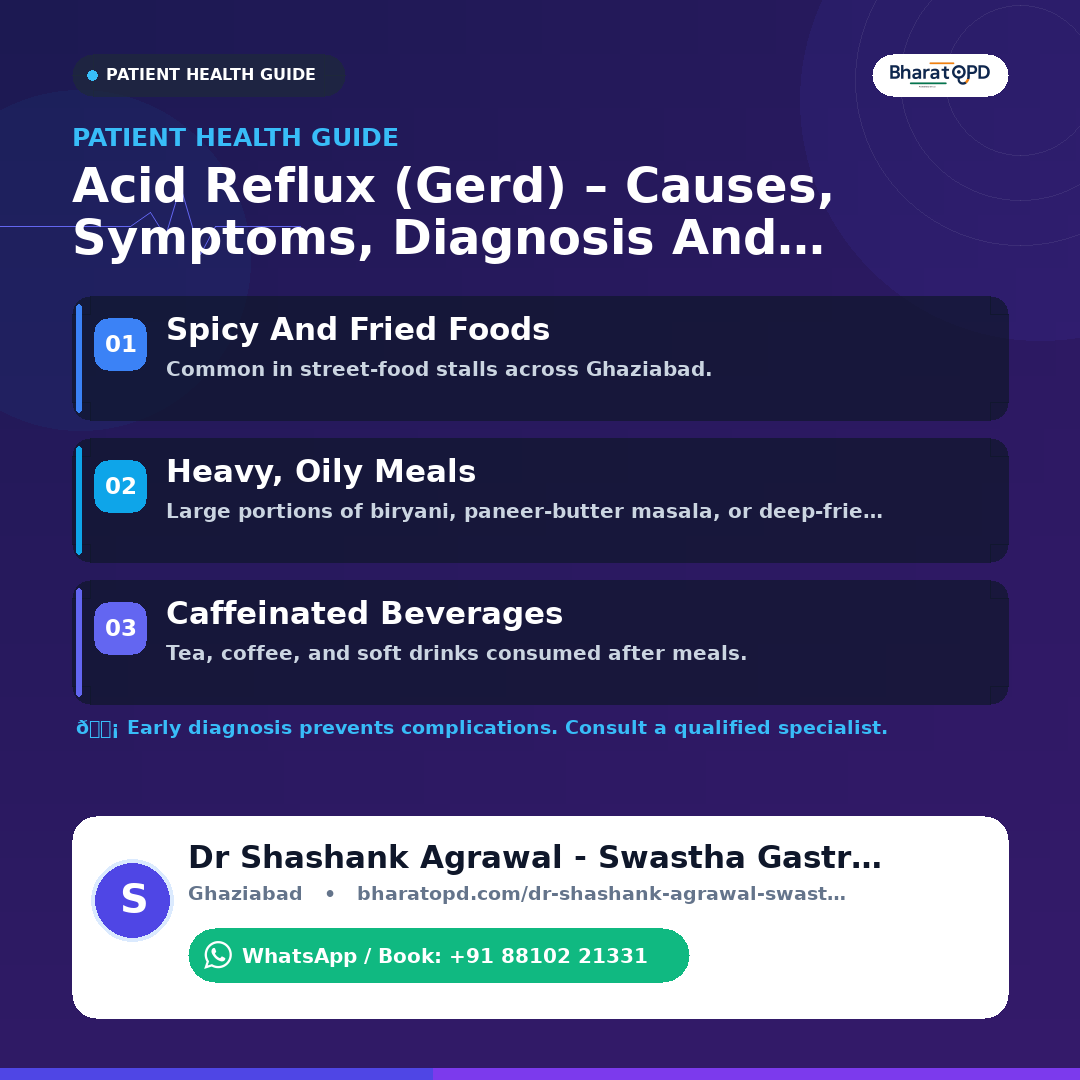
- Spicy and fried foods – Common in street‑food stalls across Ghaziabad.
- Heavy, oily meals – Large portions of biryani, paneer‑butter masala, or deep‑fried snacks.
- Caffeinated beverages – Tea, coffee, and soft drinks consumed after meals.
- Carbonated drinks – Popular sodas and sweetened lassi.
- Late‑night eating – Snacks after dinner, especially before bedtime.
- Obesity – Increased abdominal pressure that pushes acid upward.
- Smoking – Reduces lower oesophageal sphincter tone.
- Stress – Can exacerbate acid production and affect digestion.
Typical Symptoms to Watch For
Not everyone experiences the classic burning sensation. Common symptoms include:
- Burning chest pain (heartburn) after meals or when lying down.
- Sour or bitter taste in the mouth.
- Regurgitation of food or liquid.
- Difficulty swallowing (dysphagia).
- Chronic cough, hoarseness, or sore throat.
- Feeling of a lump in the throat (globus sensation).
When Should You See a Doctor?
If you experience any of the following, it is advisable to book an appointment with a gastro‑enterologist at Swastha Gastro Care Clinic:
- Heartburn more than twice a week for three weeks or longer.
- Regurgitation of food or liquid frequently.
- Unexplained weight loss or loss of appetite.
- Persistent cough, hoarseness, or sore throat without a cold.
- Difficulty swallowing or feeling food stuck.
- Chest pain that does not improve with antacids (to rule out cardiac causes).
How Is GERD Diagnosed at Swastha Gastro Care Clinic?
Dr Shashank Agrawal follows a step‑wise approach to confirm the diagnosis and assess severity:
- Medical History & Physical Exam – Detailed discussion of symptoms, diet, lifestyle, and any previous medication use.
- Upper Endoscopy (Gastroscopy) – A thin, flexible tube with a camera is passed through the mouth to visualise the oesophagus and stomach. This helps detect inflammation, ulcers, or precancerous changes.
- 24‑Hour pH Monitoring – A small probe measures acid exposure in the oesophagus over a full day, especially useful when symptoms are atypical.
- Manometry – Assesses the pressure of the lower oesophageal sphincter and oesophageal muscle coordination.
- Ultrasound or Abdominal CT – Ordered only if other abdominal conditions are suspected.
Treatment Options Available
Management is tailored to the severity of symptoms, the presence of complications, and patient preferences. The clinic offers a blend of medication, lifestyle modification, and procedural options.
1. Lifestyle and Dietary Modifications
These are the first line of defence and often reduce the need for medication.
- Avoid large meals; eat smaller portions 4–5 times a day.
- Limit or eliminate known triggers: spicy fried foods, citrus fruits, tomato‑based sauces, chocolate, mint, and carbonated drinks.
- Stay upright for at least two hours after eating; avoid lying down or sleeping immediately after a meal.
- Elevate the head of the bed by 10–15 cm using a wedge pillow.
- Maintain a healthy weight through regular walking, yoga, or local fitness groups in Indirapuram.
- Quit smoking and limit alcohol intake.
2. Medications
Dr Agrawal prescribes based on symptom frequency and severity:
- Antacids (e.g., Almagate, Calcium carbonate) – Provide rapid, short‑term relief.
- H2‑Receptor Blockers (e.g., Ranitidine, Famotidine) – Reduce acid production for up to 12 hours.
- Proton Pump Inhibitors (PPIs) (e.g., Omeprazole, Esomeprazole, Pantoprazole) – The most effective class for healing erosive oesophagitis. Typically prescribed for 4–8 weeks.
- Prokinetics (e.g., Domperidone, Itopride) – Improve gastric emptying, useful in patients with delayed stomach emptying.
3. Surgical and Endoscopic Interventions
When medication fails or complications arise, the clinic can refer patients for minimally invasive procedures:
- Laparoscopic Nissen Fundoplication – The lower oesophageal sphincter is reinforced with a wrap of the stomach, providing long‑term control.
- Endoscopic Radiofrequency (Stretta) Therapy – Delivers controlled heat to strengthen the sphincter without surgery.
Prevention – Simple Steps to Keep Acid Reflux at Bay
Adopting these habits can dramatically lower the risk of developing GERD or experiencing flare‑ups:
- Choose boiled, steamed, or grilled foods over deep‑fried items.
- Incorporate fibre‑rich foods such as whole grains, lentils, and fresh vegetables.
- Limit the use of ghee and heavy cream; opt for low‑fat dairy alternatives.
- Drink water throughout the day, but avoid large volumes during meals.
- Practice mindful eating – chew slowly and avoid rushing meals.
- Use a standing desk or take short walks after lunch to aid digestion.
Practical Advice for Residents of Indirapuram, Ghaziabad
Living in a bustling suburb like Indirapuram presents unique challenges and opportunities for GERD management:
- Local Food Choices – Street vendors often serve spicy chaats and pakoras. Opt for stalls that offer baked or grilled options, and ask for less oil.
- Access to Fresh Produce – The nearby Indirapuram Market provides fresh fruits (avoid citrus during flare‑ups) and vegetables that can be incorporated into a reflux‑friendly diet.
- Fitness Facilities – Community gyms and yoga studios in Sector‑5 and Sector‑6 offer affordable memberships for weight control.
- Health Insurance – Many insurers in Uttar Pradesh cover endoscopic procedures and PPIs; verify coverage before scheduling.
- Medication Availability – Generic PPIs and H2 blockers are readily available at local pharmacies such as MedPlus and Apollo Pharmacy.
When to Book an Appointment at Swastha Gastro Care Clinic
Dr Shashank Agrawal, a certified gastro‑enterologist, offers same‑day consultations for urgent reflux symptoms and comprehensive GERD work‑ups for chronic cases. The clinic’s location at Shop, Galli No 2, Abhay Khand 3, Pocket 3, Indirapuram, Ghaziabad, provides easy parking and a patient‑friendly environment.
Follow‑Up and Monitoring
After initiating treatment, a follow‑up after 4–6 weeks is recommended to assess symptom relief and adjust medication if needed. Endoscopic re‑evaluation is advised for patients with erosive oesophagitis or alarm features.
Frequently Asked Questions
Can GERD cause heart disease?
GERD and heart disease share similar chest‑pain symptoms, but GERD itself does not cause heart disease. However, persistent chest pain should always be evaluated to rule out cardiac causes.
Is it safe to take PPIs for a long time?
Short‑term use (up to 8 weeks) is safe for most patients. Long‑term use may be considered under medical supervision, especially if symptoms recur after stopping the medication.
Do antacids interfere with the absorption of other medicines?
Yes, antacids can reduce the absorption of certain drugs like iron supplements and some antibiotics. Inform Dr Agrawal about all medicines you are taking.
Can yoga help with acid reflux?
Gentle yoga poses that promote upright posture and diaphragmatic breathing can improve digestion and reduce reflux episodes. Avoid inversions (e.g., headstand) immediately after meals.