Depression is a common yet often misunderstood mental health condition. This guide explains its causes, signs, when to seek help, diagnostic steps, treatment options, and practical tips for residents of Mumbai, with specific information about NG Psychiatry Clinic and its expert team.
What Is Depression?
Depression, medically termed major depressive disorder (MDD), is a mood disorder that affects how a person feels, thinks, and handles daily activities. It is more than occasional sadness; it is a persistent feeling of emptiness, hopelessness, or loss of interest that lasts for at least two weeks and interferes with work, relationships, and self‑care.
Why Is Depression Common in Mumbai?
Living in a bustling metropolis like Mumbai brings unique stressors—long commutes, high cost of living, crowded spaces, and the pressure to succeed. These factors can trigger or exacerbate depressive episodes, especially when combined with limited personal space and irregular sleep patterns.
Key Causes and Risk Factors
Depression usually results from a combination of biological, psychological, and social factors. In the context of Mumbai, the following are especially relevant:
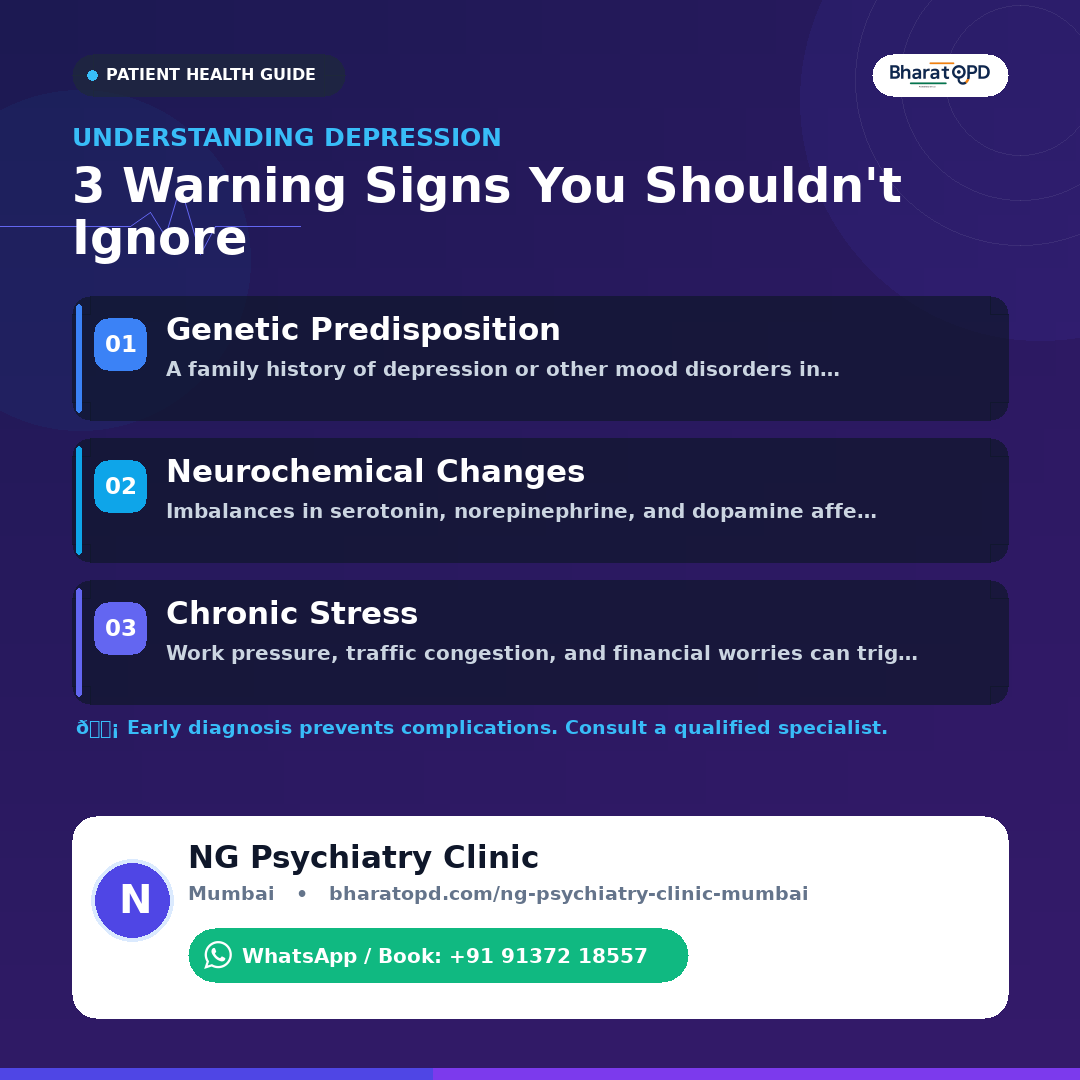
- Genetic predisposition: A family history of depression or other mood disorders increases risk.
- Neurochemical changes: Imbalances in serotonin, norepinephrine, and dopamine affect mood regulation.
- Chronic stress: Work pressure, traffic congestion, and financial worries can trigger the hypothalamic‑pituitary‑adrenal (HPA) axis, leading to sustained cortisol elevation.
- Social isolation: Despite being surrounded by millions, many residents feel lonely, especially migrants away from their support networks.
- Physical health conditions: Diabetes, hypertension, and thyroid disorders—prevalent in urban India—are linked with higher depression rates.
- Substance use: Alcohol or nicotine misuse can both mask and worsen depressive symptoms.
Recognising the Symptoms
Depression manifests differently in each individual, but the following signs are common. If you notice several of these symptoms persisting for more than two weeks, consider seeking professional help.
- Persistent sadness, emptiness, or “numbness.”
- Loss of interest in previously enjoyable activities (anhedonia).
- Significant changes in appetite or weight—either loss or gain.
- Disturbed sleep—insomnia or hypersomnia.
- Fatigue or loss of energy despite adequate rest.
- Feelings of worthlessness, excessive guilt, or self‑criticism.
- Difficulty concentrating, making decisions, or remembering details.
- Recurrent thoughts of death, suicidal ideation, or self‑harm.
When to See a Doctor
Immediate medical attention is essential if you experience any of the following:
- Thoughts of harming yourself or others.
- Inability to carry out daily responsibilities (work, studies, household tasks).
- Physical symptoms that do not improve with usual treatment (e.g., chronic headaches, stomach pain).
- Sudden mood swings, agitation, or panic attacks.
For less urgent but persistent symptoms, schedule an appointment with a mental‑health professional. Early intervention can prevent worsening of the condition.
How Depression Is Diagnosed at NG Psychiatry Clinic
NG Psychiatry Clinic follows a thorough, evidence‑based assessment process:
- Initial consultation: Dr. N. G. Patel (Founder & Senior Psychiatrist) and Dr. S. Desai (Consultant Psychiatrist) conduct a detailed interview covering symptom history, medical background, family history, and psychosocial stressors.
- Standardised rating scales: Tools such as the Patient Health Questionnaire‑9 (PHQ‑9) and Hamilton Depression Rating Scale (HDRS) help quantify severity.
- Physical examination & labs: To rule out medical causes, basic blood tests (CBC, thyroid profile, vitamin D, and blood glucose) are ordered.
- Psychiatric formulation: The clinicians integrate findings into a comprehensive formulation that guides treatment planning.
The clinic’s location at 145B, Lilian House, Mahim West, Mumbai, offers a quiet, accessible environment for these evaluations.
Treatment Options Available at NG Psychiatry Clinic
Depression treatment is highly individualised. NG Psychiatry Clinic offers a blend of pharmacological, psychotherapeutic, and lifestyle interventions.
1. Medication Management
When indicated, antidepressants are prescribed after a careful risk‑benefit discussion. Common classes include:
- Selective Serotonin Reuptake Inhibitors (SSRIs) – e.g., sertraline, fluoxetine.
- Serotonin‑Norepinephrine Reuptake Inhibitors (SNRIs) – e.g., venlafaxine, duloxetine.
- Atypical agents – e.g., bupropion, mirtazapine.
The clinic monitors response and side‑effects weekly for the first month, adjusting dosage as needed.
2. Psychotherapy
Evidence shows that talking therapies are as effective as medication for mild‑to‑moderate depression. NG Psychiatry Clinic provides:
- Cognitive‑Behavioural Therapy (CBT): Structured sessions that identify negative thought patterns and replace them with healthier cognitions.
- Interpersonal Therapy (IPT): Focuses on improving relationships and social functioning.
- Mindfulness‑Based Stress Reduction (MBSR): Tailored for urban dwellers to manage stress and improve emotional regulation.
Therapists schedule weekly 45‑minute sessions, either in‑person at the Mahim clinic or via secure video‑consultation for those with mobility constraints.
3. Lifestyle & Adjunctive Strategies
Complementary measures that enhance recovery:
- Physical activity: Regular walking along Marine Drive or yoga classes at nearby community centres.
- Sleep hygiene: Maintaining a consistent bedtime, limiting screen exposure, and creating a calm bedroom environment.
- Nutrition: A balanced diet rich in omega‑3 fatty acids (fish, flaxseed) and B‑vitamins.
- Social support: Joining local support groups such as “Mumbai Mental Health Forum” or connecting with family.
4. Advanced Interventions (for treatment‑resistant cases)
If standard treatments do not achieve remission after 6–8 weeks, the clinic may consider:
- Switching to a different antidepressant class.
- Augmentation with low‑dose atypical antipsychotics (e.g., aripiprazole).
- Electroconvulsive therapy (ECT) – available at partner hospitals in Mumbai, coordinated by Dr. Patel.
How to Access Care at NG Psychiatry Clinic
Getting started is straightforward:
- Appointment booking: Call +91‑22‑XXXX‑XXXX or use the online portal on the clinic’s website. Walk‑ins are accepted between 10 am‑12 pm on weekdays.
- First visit: Arrive 10 minutes early, bring any previous medical reports, and a list of current medications.
- Follow‑up schedule: Typically, a follow‑up is set for 2 weeks after the initial visit, then spaced based on clinical response.
The clinic’s central location in Mahim West is well‑connected by local trains (Mahim Junction) and BEST buses, making it convenient for residents across Mumbai.
Prevention & Self‑Help Tips for Mumbai Residents
While not all depressive episodes are preventable, adopting healthy habits can lower risk:
- Limit exposure to excessive news or social media, especially during peak traffic hours.
- Practice brief mindfulness exercises during commutes—deep breathing or guided audio clips.
- Maintain regular contact with friends or family, even if through WhatsApp or video calls.
- Seek early professional help if you notice mood changes lasting more than a week.
- Utilise community resources such as the Mumbai Mental Health Helpline (080‑1234‑5678) for crisis counseling.
Frequently Asked Questions
Is depression a sign of personal weakness?
No. Depression is a medical condition arising from complex brain chemistry and life circumstances. Seeking help is a sign of strength.
Can I get treatment without medication?
Yes. Many patients achieve remission with psychotherapy, lifestyle changes, or a combination thereof. Medication is recommended when symptoms are moderate to severe or when psychotherapy alone is insufficient.
How long does treatment usually take?
Most individuals notice improvement within 4‑6 weeks of starting an antidepressant or regular therapy. Full remission may take 3‑6 months, after which a maintenance plan is discussed.
Are the services confidential?
All consultations at NG Psychiatry Clinic are strictly confidential, adhering to the Indian Medical Council (Professional Conduct, Etiquette and Ethics) Regulations.
What if I miss a dose of medication?
Take the missed dose as soon as you remember, unless it’s close to the next scheduled dose. Do not double‑dose; contact the clinic for guidance.
Take the First Step Today
Depression is treatable, and recovery is possible with the right support. NG Psychiatry Clinic in Mahim, Mumbai, combines clinical expertise with culturally sensitive care to help you regain balance and joy. If you or a loved one is experiencing any of the symptoms described, schedule an appointment with Dr. N. G. Patel or Dr. S. Desai today—your mental well‑being deserves priority.