A comprehensive guide to carpal tunnel syndrome for patients in Bengaluru – causes, symptoms, diagnosis, treatment options available at Pincer Orthopaedics, and practical tips to prevent recurrence.
What Is Carpal Tunnel Syndrome?
Carpal tunnel syndrome (CTS) is a common nerve‑compression disorder that affects the hand and wrist. It occurs when the median nerve, which runs from the forearm into the palm, becomes compressed within the carpal tunnel – a narrow passageway bounded by bones and the flexor retinaculum.
Why Does It Occur? – Common Causes and Risk Factors
In most cases, CTS develops gradually due to a combination of anatomical and lifestyle factors. Understanding these helps patients take preventive steps.
Primary Causes
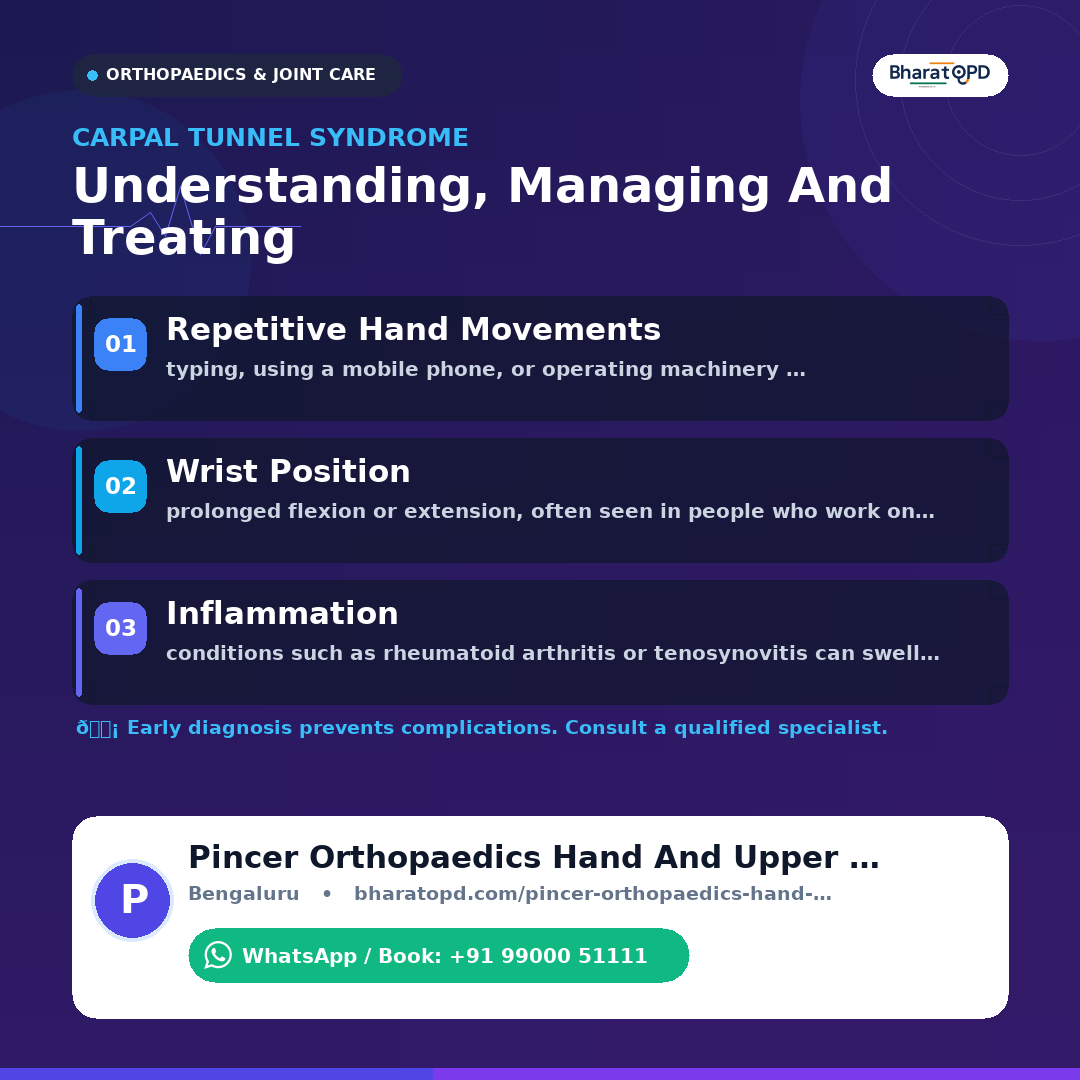
- Repetitive hand movements – typing, using a mobile phone, or operating machinery for long periods.
- Wrist position – prolonged flexion or extension, often seen in people who work on keyboards without ergonomic support.
- Inflammation – conditions such as rheumatoid arthritis or tenosynovitis can swell the tunnel.
Risk Factors Specific to Bengaluru
- High usage of smartphones and digital devices among students and professionals.
- Growing number of call‑center employees and IT workers who spend extended hours at desks.
- Seasonal humidity that can exacerbate swelling in people with underlying arthritis.
Recognising the Symptoms
Early detection is key to preventing permanent nerve damage. Typical signs include:
- Numbness or tingling in the thumb, index, middle and half of the ring finger.
- Burning sensation that may worsen at night.
- Weakness in grip – difficulty holding objects like a pen or a cup.
- Occasional pain that can radiate up the forearm.
If any of these symptoms persist for more than a few weeks, it is advisable to seek evaluation.
When Should You See a Doctor?
Visit the Pincer Orthopaedics Hand And Upper Limb Clinic if you experience:
- Nighttime numbness that wakes you up.
- Loss of hand strength affecting daily activities.
- Symptoms that do not improve with rest or simple home measures.
- Any history of wrist trauma or underlying systemic disease (e.g., diabetes, rheumatoid arthritis).
Early consultation allows the clinic’s orthopaedic specialists to recommend the most appropriate, often non‑surgical, interventions.
How Is Carpal Tunnel Diagnosed at Pincer Orthopaedics?
The clinic follows a step‑wise, evidence‑based approach:
- Clinical examination – Tinel’s and Phalen’s tests are performed to reproduce symptoms.
- Electrodiagnostic studies – Nerve conduction velocity (NCV) tests assess the speed of electrical impulses through the median nerve.
- Ultrasound or MRI – Imaging may be ordered if there is suspicion of a mass, cyst, or severe inflammation.
These investigations help differentiate CTS from other conditions such as cervical radiculopathy or peripheral neuropathy.
Treatment Options Available at Pincer Orthopaedics
Conservative Management
Most patients respond well to non‑surgical measures, especially when the condition is caught early.
- Activity modification – Adjusting hand posture, taking micro‑breaks every 30‑45 minutes, and using ergonomic keyboards.
- Wrist splinting – Wearing a neutral‑position splint, particularly at night, reduces pressure on the median nerve.
- Physiotherapy – Stretching and strengthening exercises prescribed by the clinic’s physiotherapists improve tendon glide and nerve mobility.
- Medications – Non‑steroidal anti‑inflammatory drugs (NSAIDs) or short courses of oral steroids may relieve inflammation.
Injectable Therapies
For patients who need quicker relief, the orthopaedic team can administer a corticosteroid injection directly into the carpal tunnel. This procedure, performed under ultrasound guidance, can reduce swelling and provide symptom relief for several months.
Surgical Intervention – Endoscopic or Open Release
If symptoms persist despite 6‑8 weeks of diligent conservative care, or if there is evidence of nerve damage on electrodiagnostic testing, surgery is considered.
At Pincer Orthopaedics, the surgeons offer two well‑established techniques:
- Open carpal tunnel release – A small incision (≈2‑3 cm) over the palm allows direct visualization of the flexor retinaculum, which is then cut to relieve pressure.
- Endoscopic release – A minimally invasive method using a tiny camera and a specialized blade, resulting in a smaller scar and faster return to daily activities.
Both procedures are performed under regional or general anaesthesia, depending on patient preference and overall health.
Post‑Operative Care and Rehabilitation
Recovery protocols are tailored to the individual:
- First week – Light finger movements are encouraged; heavy lifting is avoided.
- Weeks 2‑4 – Gradual introduction of wrist flexion‑extension exercises under physiotherapist supervision.
- Weeks 4‑6 – Return to most office work; patients are advised to continue ergonomic practices.
The clinic’s rehabilitation team monitors progress and adjusts exercises to ensure optimal nerve healing.
Preventing Recurrence – Practical Tips for Bengaluru Residents
Even after successful treatment, adopting healthy hand habits is essential.
- Maintain an ergonomic workstation – use a split‑keyboard, a mouse with a neutral grip, and a wrist rest.
- Take “20‑20‑20” breaks – every 20 minutes, look away for 20 seconds and gently stretch your hands.
- Stay hydrated and manage weight – excess fluid retention can increase tissue swelling.
- Control systemic conditions – keep diabetes and thyroid disorders well‑regulated.
- Avoid prolonged wrist flexion – when using smartphones, hold the device at eye level rather than bending the wrist.
Regular follow‑up visits at Pincer Orthopaedics help detect early signs of recurrence and reinforce preventive strategies.
Frequently Asked Questions
Can carpal tunnel syndrome heal on its own?
In mild cases, symptoms may improve with rest and ergonomic changes, but most patients benefit from targeted therapy to avoid permanent nerve damage.
Is surgery painful?
The procedure itself is performed under anaesthesia, so you feel no pain during surgery. Post‑operative discomfort is usually mild and managed with oral analgesics.
How long does it take to return to work after surgery?
For most office‑based jobs, patients resume duties within 2‑3 weeks. Manual labour may require 4‑6 weeks, depending on the healing progress.
Will I need a splint after surgery?
A soft wrist splint is often recommended for the first few nights to protect the incision site and minimise swelling.
Are there any long‑term complications?
Complications are rare. With proper surgical technique, the risk of infection, scar tenderness or incomplete release is below 2 %.