Learn how diabetic retinopathy affects vision, the importance of regular eye checks in Mumbai, and how BhalaNetra Super Speciality Eye Hospital’s retina specialists diagnose and treat this condition.
What Is Diabetic Retinopathy?
Diabetic retinopathy (DR) is a diabetes‑related eye disease that damages the tiny blood vessels of the retina, the light‑sensing layer at the back of the eye. Over time, high blood‑sugar levels cause these vessels to leak, swell, or close off, leading to vision loss if not managed promptly.
Why Mumbai Residents Need to Pay Extra Attention
India has one of the highest numbers of people with diabetes in the world, and Mumbai’s fast‑paced lifestyle often makes blood‑sugar control challenging. The humid climate can also exacerbate eye‑related discomfort, making regular eye examinations essential for early detection.
Common Symptoms to Watch For
In the early stages, diabetic retinopathy may not cause any noticeable symptoms. As the disease progresses, patients might experience:
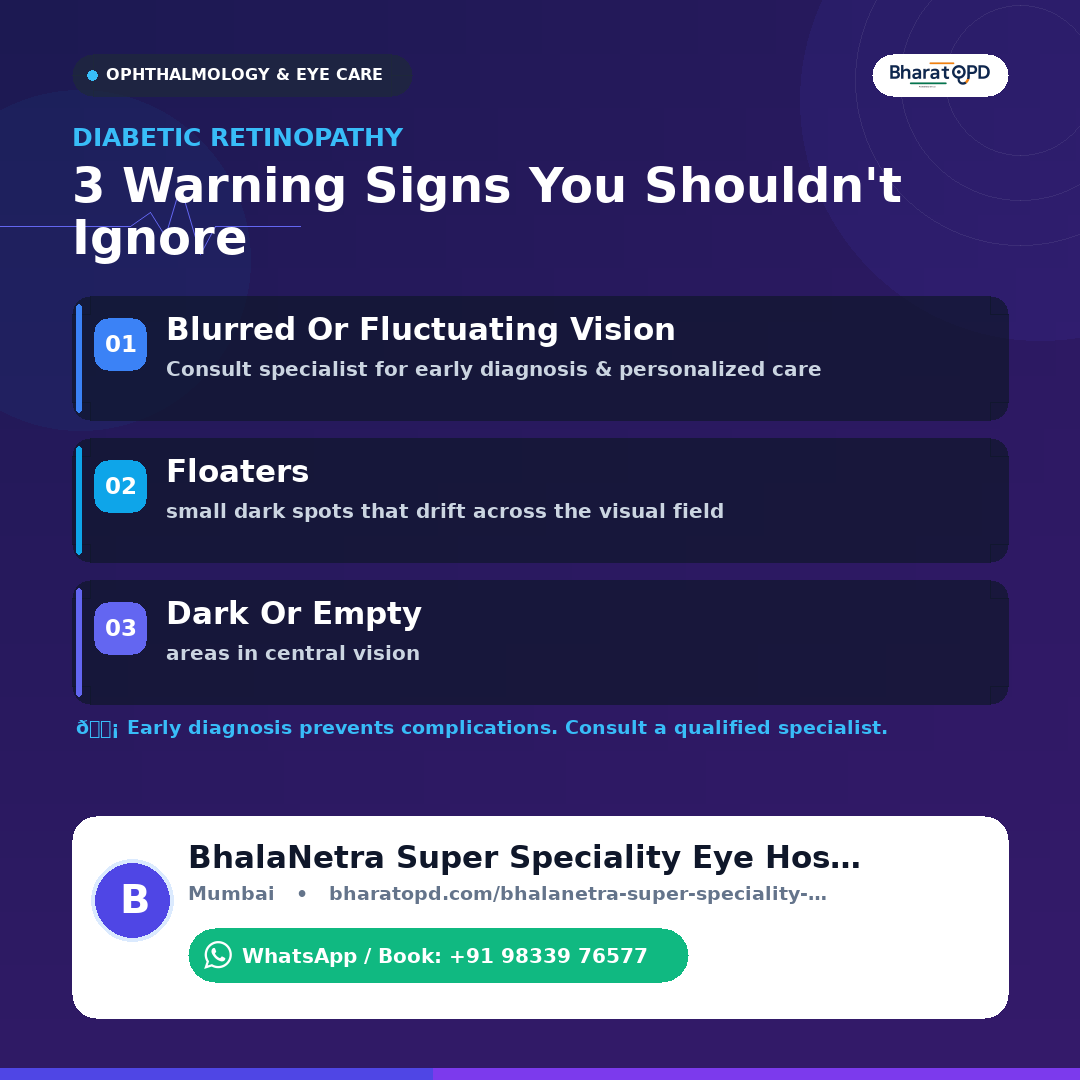
- Blurred or fluctuating vision
- Floaters – small dark spots that drift across the visual field
- Dark or empty areas in central vision
- Difficulty seeing at night
If you notice any of these signs, schedule an eye check‑up without delay.
When to See an Eye Specialist
Even if you feel fine, you should see an ophthalmologist:
- At the time of diabetes diagnosis
- Every six months thereafter if you have type 1 diabetes
- Every year if you have type 2 diabetes or gestational diabetes
Patients living in Mumbai’s Bhandup West area can conveniently visit BhalaNetra Super Speciality Eye Hospital at Shop Number 5‑8, Sachdeva Complex, Jangal Mangal Rd, Battipada.
How BhalaNetra Diagnoses Diabetic Retinopathy
Our retina team follows a systematic approach:
1. Detailed Medical History
We review your diabetes duration, blood‑sugar control, blood pressure, and any previous eye problems.
2. Visual Acuity Test
Standard eye‑chart testing determines any reduction in sharpness of vision.
3. Dilated Fundus Examination
After dilating your pupils, our specialists examine the retina using a slit‑lamp biomicroscope. This allows detection of micro‑aneurysms, hemorrhages, and neovascularisation.
4. Imaging Techniques
We employ:
- Fundus photography – captures high‑resolution images of the retina for baseline comparison.
- Optical Coherence Tomography (OCT) – provides cross‑sectional images to assess retinal thickness and swelling.
- Fluorescein Angiography – highlights leaking vessels and areas of non‑perfusion.
All these investigations are available at our state‑of‑the‑art facility in Mumbai.
Treatment Options at BhalaNetra
The management plan depends on the stage of retinopathy:
Early (Non‑Proliferative) Diabetic Retinopathy
Focus is on tight glycaemic control and regular monitoring. Lifestyle advice includes:
- Balanced diet with low‑glycaemic index foods
- Regular physical activity (at least 150 minutes/week)
- Blood pressure and lipid management
Our retina specialists may recommend focal laser therapy for isolated micro‑aneurysms.
Advanced (Proliferative) Diabetic Retinopathy
When new abnormal vessels grow, we intervene promptly:
- Pan‑Retinal Laser Photocoagulation (PRP) – reduces the stimulus for new vessel growth.
- Intravitreal Anti‑VEGF Injections – medications such as ranibizumab or aflibercept, administered in our sterile procedure room, help shrink leaking vessels and reduce swelling.
- Vitrectomy Surgery – for cases with vitreous hemorrhage or retinal detachment, our experienced vitreoretinal surgeons perform minimally invasive 23‑ or 25‑gauge vitrectomy.
All procedures are performed under strict aseptic protocols, and post‑operative care includes follow‑up visits at BhalaNetra’s Bhandup West clinic.
Managing Diabetic Macular Edema (DME)
DME is the leading cause of vision loss in diabetic patients. Treatment options include:
- Anti‑VEGF injections (first‑line)
- Focal/grid laser photocoagulation (when injections are contraindicated)
- Corticosteroid implants for chronic cases
Our retina team tailors therapy based on OCT findings and patient preferences.
Prevention and Lifestyle Tips for Mumbai Residents
Preventing diabetic retinopathy starts with controlling diabetes. Here are practical steps for people living in Mumbai:
- Regular Blood Sugar Monitoring – Aim for HbA1c < 7 % as advised by your physician.
- Blood Pressure Control – Keep systolic BP below 130 mm Hg.
- Healthy Eating – Incorporate local foods like millets, beans, and leafy greens; limit sugary drinks and deep‑fried snacks common in street food.
- Physical Activity – Walk or cycle in the early morning or late evening to avoid Mumbai’s heat.
- Annual Eye Exams – Even if you feel fine, book a retinal screening at BhalaNetra at least once a year.
Our hospital also runs community outreach camps in Bhandup West and neighboring suburbs, offering free retinal photography for high‑risk patients.
Frequently Asked Questions
Can diabetic retinopathy be cured?
While the disease cannot be “cured,” early detection and timely treatment can halt progression and preserve vision.
Is laser therapy painful?
Laser treatment is performed under a local anesthetic eye drop. Most patients feel only a mild snapping sensation.
How many anti‑VEGF injections will I need?
The initial phase usually involves monthly injections for three to five months, followed by a personalized maintenance schedule based on OCT results.
Do I need a referral to see a retina specialist at BhalaNetra?
No. You can directly book an appointment online or call our Bhandup West clinic. Walk‑ins are also welcome for urgent concerns.
What is the cost of treatment?
Costs vary by procedure. BhalaNetra offers transparent pricing and accepts major insurance plans common in Mumbai. Our finance team can provide a detailed estimate during your first visit.